
How long does a garage floor coating take to cure? For most Memphis garages, you can walk on the floor the next day and park on it within one to seven days, depending on which coating went down. A polyaspartic or polyurea system is usually ready for a car in about 24 hours. A traditional epoxy system usually needs five to seven days before it can take tires. The exact number comes from the product data sheet and from the weather in your garage that week, and this guide explains both so you can plan the job without guessing.
Table of Contents
- The Short Answer
- Dry, Cured, and Ready Are Three Different Things
- How Long Does a Garage Floor Coating Take to Cure by Product Type
- What Memphis Weather Does to Cure Time
- How to Tell When Your Floor Is Ready
- Mistakes That Ruin a Curing Floor
- Planning Your Install Day Around the Cure
- What Cure Time Means for a Commercial Floor
- Frequently Asked Questions
The Short Answer
Every homeowner we talk to in Memphis, Germantown, and Collierville asks the same thing before the crew shows up: how long does a garage floor coating take to cure, and when can I get my car back in? Here is the honest version. A coating dries in hours, cures over days, and reaches full chemical hardness over weeks. You do not have to wait for full hardness to use the floor. You do have to wait for the cure stage that matches what you want to do on it.
The typical windows on manufacturer data sheets look like this. Foot traffic: 12 to 24 hours for epoxy, 4 to 6 hours for polyaspartic. Light use such as moving shelves and boxes: 24 to 72 hours for epoxy, about 24 hours for polyaspartic. Vehicle traffic: 5 to 7 days for epoxy, 24 to 48 hours for polyaspartic. Full chemical cure, where the floor is as hard as it will ever get: roughly 7 days for polyaspartic and up to 30 days for some epoxies. Those are ranges, not promises, because temperature and humidity move them, and we cover that below.
If you want the shortest wait, the coating system you choose matters more than anything else. That is the first decision we walk through on every garage floor coating estimate.
Dry, Cured, and Ready Are Three Different Things
People use dry and cured as if they mean the same thing. They do not, and mixing them up is how floors get damaged in the first week. Dry means the surface no longer feels tacky. Cured means the chemical reaction between the resin and the hardener has gone far enough that the film can take load, abrasion, and hot tires without deforming. Ready means cured enough for a specific job, whether that is walking, sliding a toolbox, or backing in a truck.
A coating can look and feel dry to the touch within a few hours and still be soft underneath. Press a fingernail into it at that stage and it leaves a mark. Drive on it and the tire tread prints into the film and stays there forever. That is why the answer to how long does a garage floor coating take to cure is always tied to what you plan to do on the floor, not to how it looks.
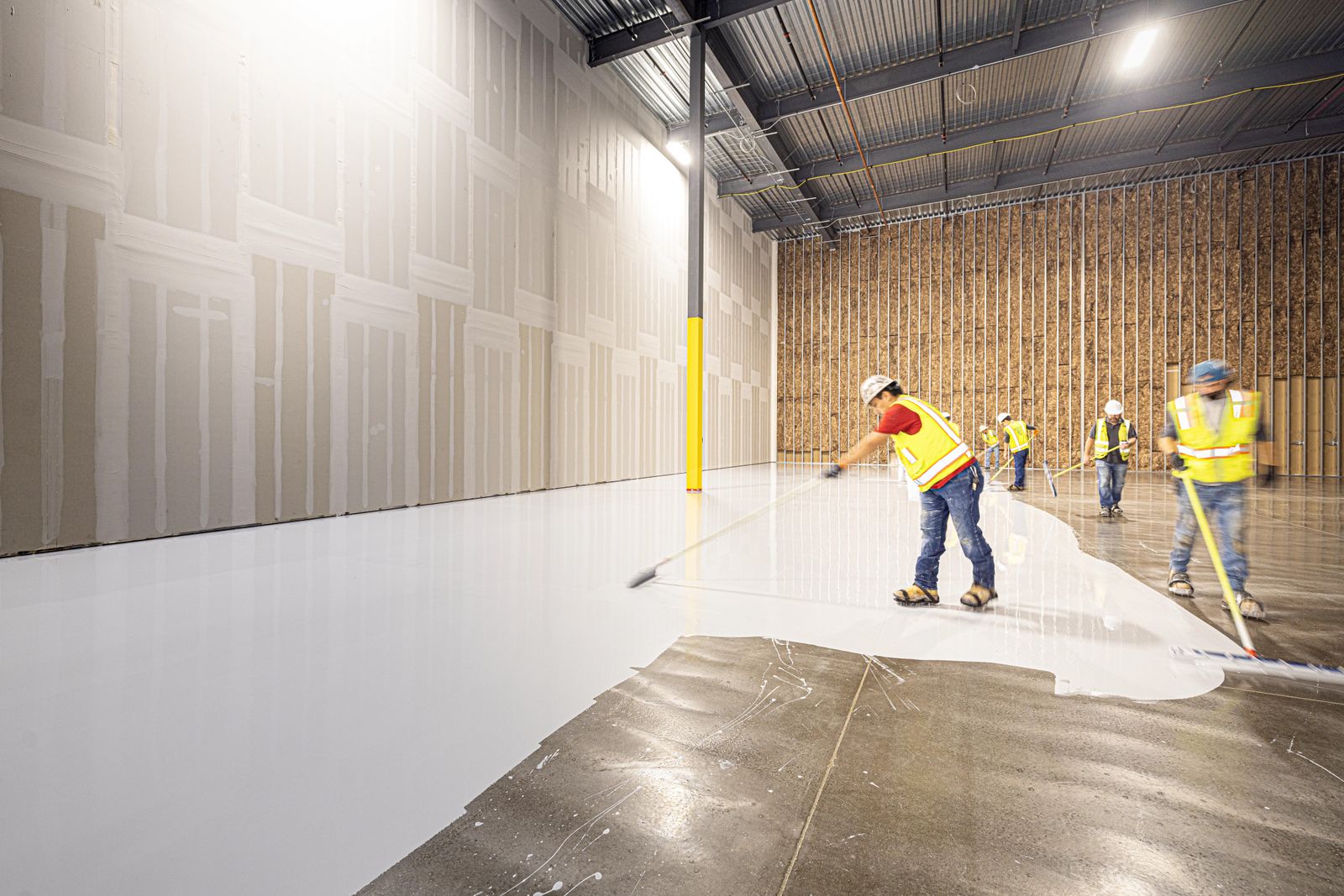
Think of the timeline in three checkpoints. First, tack free: you can touch it and nothing transfers to your finger. Second, service cure: you can walk, then work, then park. Third, full cure: the floor has reached its final hardness and chemical resistance, which is when it will shrug off brake fluid, road salt, and a dropped wrench the way the data sheet says it will. Our crew tells every customer which checkpoint they are at on the day we leave and when the next one arrives.
How Long Does a Garage Floor Coating Take to Cure by Product Type
So how long does a garage floor coating take to cure when you compare the products head to head? Here are the four systems we install across the Memphis metro and what each one asks of your patience.
Epoxy
A 100 percent solids epoxy floor coating is the slowest to cure and the most forgiving to apply. Most epoxies are walkable in 12 to 24 hours, take light use in 2 to 3 days, and want 5 to 7 days before vehicles. Cooler garages stretch that. Epoxy is a good fit for a homeowner who can leave the car in the driveway for a week and wants a thick, self-leveling base coat.
Polyaspartic
Polyaspartic is the fast one. Walkable in about 4 to 6 hours, light use the same day or the next morning, vehicles at 24 hours in most conditions. It also cures in cold weather that would stall an epoxy. This is the system behind our one-day garage installs: grind in the morning, base coat and flake by midday, clear topcoat by afternoon, park the next day.
Polyurea
Polyurea sets even faster than polyaspartic, sometimes within minutes of leaving the roller, which is why it is usually sprayed by a trained crew rather than rolled. Vehicle traffic is typically fine at 24 hours. It is flexible, so it handles slabs that move a little with the seasons, which is common on older Memphis lots with clay soil underneath.
Hybrid systems
Many of the floors we install are hybrids: an epoxy or polyurea base coat for build and adhesion, then a polyaspartic clear topcoat for UV stability and fast return to service. The cure clock runs on the slowest product in the stack for full hardness, but the topcoat governs when you can walk and park. If you are still deciding which stack fits your garage, our page on what concrete coatings are lays out the differences in plain language.
What Memphis Weather Does to Cure Time
Weather is the variable that makes how long does a garage floor coating take to cure a Memphis question and not just a chemistry question. Resin cure is a chemical reaction, and reactions run faster when warm and slower when cold. Most data sheets assume about 70 degrees and moderate humidity. Your garage in January is not that, and your garage in August is not that either.
- Cold slabs: below about 50 degrees, epoxy cure can double in length or stall. Polyaspartic keeps curing down to freezing on most product lines, which is why we lean on it from November through February.
- Hot slabs: above 90 degrees, pot life shrinks and the coating can skin over before it levels. The cure finishes faster, but application has to be quick and controlled, so we start early in summer.
- Humidity: moisture-cured products such as polyurea and some polyaspartics actually like a little humidity. Epoxies do not, and a humid slab can cause a cloudy film called amine blush on the surface.
- Slab moisture: vapor moving up through the concrete slows cure at the bond line and is the top cause of coatings letting go in the first year. We test every slab before we coat it.
The National Weather Service office in Memphis publishes the local forecast and climate data, and our crews check it before every job. A wet spring week can move a vehicle-ready date by a day. We would rather tell you that up front than have you find a tire print in a new floor.
How to Tell When Your Floor Is Ready
You do not need lab equipment to know when the floor has hit each checkpoint. Here is what our installers check, and what you can check yourself after we leave.
- Tack test: press a clean fingertip on an edge that will be hidden by a wall or cabinet. If nothing transfers and there is no drag, the surface is tack free.
- Thumbnail test: press a thumbnail into the same hidden spot. If it leaves a mark that stays, the film is not ready for anything heavier than socks.
- Smell test: a strong resin smell means the reaction is still active. Once the odor is mostly gone, the film is well into service cure.
- Data sheet clock: count from the time the last coat went down, at the temperature the garage actually held overnight, not the daytime high.
We leave a written timeline on every installation with the date and time of the last coat and the earliest safe time for foot traffic, light use, and vehicles in that week’s weather. If you are not sure, call us at (901) 930-5763 before you roll anything heavy across it.
Mistakes That Ruin a Curing Floor
Most damage to a new floor happens between day one and day seven, and almost all of it comes from the same short list.
- Parking too early. A tire that has been on the interstate can be over 120 degrees, and a soft coating under a hot tire prints or pulls up. Wait for the vehicle window, then drive in slowly the first few times.
- Dragging instead of lifting. Sliding a steel shelf or a rolling toolbox before service cure gouges the film. Lift, or put a sheet of cardboard under it, for the first week.
- Closing the garage tight. Cure needs air movement. Cracking the door a few inches or running a fan keeps solvent and moisture moving out.
- Washing the floor. No hose, no mop, no cleaners until full cure. Water on a partially cured epoxy can leave a white haze.
- Turning up the heat with a propane torpedo heater. Unvented heaters dump moisture and carbon dioxide into the air, which can blush an epoxy surface. Use electric heat or wait.
A coating that peels or hazes in week one almost always traces to one of those, or to prep, which we cover in our post on why epoxy garage floors peel. The fix for either is the same: patience on your side, and mechanical grinding plus a moisture test on ours.
Planning Your Install Day Around the Cure
Because the answer to how long does a garage floor coating take to cure depends on the system and the week, we plan every install backward from the day you need the car inside. Here is how a typical Memphis job runs.
- Day before: clear the garage. Cars in the driveway, shelves and bikes moved out or lifted. We can help move heavy items when you tell us ahead of time.
- Install day: diamond grinding, crack and joint repair, moisture check, base coat, decorative flake if chosen, then the clear topcoat. Most single and double garages finish in one day with a polyaspartic system.
- Day one after: walk on it, bring back light items, keep the door cracked for airflow.
- Day two after: park a polyaspartic or polyurea floor. Keep waiting on an epoxy floor.
- Day five to seven after: park an epoxy floor. All systems are now ready for normal use.
- Week four: full chemical cure on the slowest epoxies. Wash and wax as you like from here on.
That schedule is why we get so many calls from homeowners who tried a hardware store kit first. A kit floor can take a week to hold a car and still fail under hot tires, and our post on DIY versus professional concrete coating explains why the product and the prep, not the roller, decide the result. Serving Memphis since 2018, the crew has coated hundreds of garages, and the cure timeline we give you is the one we have watched hold up on real driveways across the Memphis area.
What Cure Time Means for a Commercial Floor
Homeowners can leave the car in the driveway for a week. A restaurant kitchen, a warehouse bay, or a school gym cannot close for a week, which is why the question how long does a garage floor coating take to cure gets even more attention on commercial jobs than residential ones. The same chemistry applies, but the planning changes.
- Phased installs. On a large floor we coat in sections so one side stays open while the other cures. A polyaspartic section coated Friday afternoon is usually taking forklift traffic Monday morning.
- Overnight and weekend work. Fast-cure systems let a crew coat after close and hand the floor back before open. This is the standard approach for retail and food service in the Memphis area.
- Heavier loads wait longer. A forklift, a pallet jack loaded with stock, or a rolling steel cart puts more point load on the film than a passenger car. We add a day to the vehicle window for that kind of traffic.
- Chemical exposure waits for full cure. A floor that will see brake fluid, cooking oil, or cleaning chemicals every day should reach full chemical cure before it takes that abuse, which means holding off on harsh cleaners for the first couple of weeks.
If you manage a facility and need a date the floor can be back in service, tell us the traffic it will see and the hours you can give up. We will pick the system and the schedule around those two numbers rather than making you work around the coating.
Frequently Asked Questions
How long does a garage floor coating take to cure before I can park on it?
Polyaspartic and polyurea floors are usually ready for a car in 24 hours, and epoxy floors need about 5 to 7 days. Cold garages add time, so we put the exact date on your installation paperwork.
Can I walk on a new garage floor coating the same day?
A polyaspartic topcoat is usually walkable in 4 to 6 hours, and most epoxies are walkable the next morning. Socks or clean soft shoes only until the floor passes the thumbnail test. Once it is cured, a textured finish keeps it from being slick, which we cover in are epoxy garage floors slippery.
Does a slow cure mean something went wrong?
Usually no. A slow cure almost always means a cold slab or high humidity, and the floor finishes curing once the garage warms up. A floor that stays soft after two weeks, or lifts at the edges, points to moisture or a prep problem, and that is the subject of our post on why epoxy garage floors peel.
How long does a garage floor coating last once it has cured?
A professionally installed polyaspartic or epoxy floor commonly holds up for 10 to 20 years with basic care. The cure week is the only fragile stretch, and our guide on how long a garage floor coating lasts covers what affects the rest of its life.
Ready for a Garage Floor You Can Park on Tomorrow?
Memphis Coatings Company installs polyaspartic, polyurea, and epoxy floors across Memphis, Germantown, Collierville, Southaven, and Olive Branch, with most garages finished in a single day. Call (901) 930-5763 or request a free estimate on our garage floor coating page and we will give you a cure timeline for your garage, your product, and your week.