
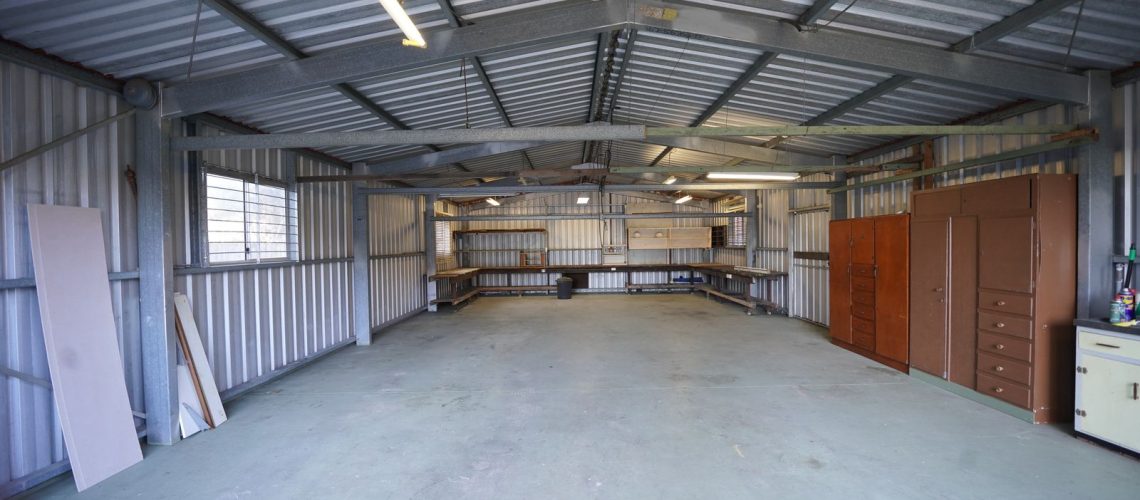
An epoxy garage floor peeling up in sheets, flaking at the edges, or lifting where the tires sit almost always comes down to one thing: the coating never bonded to the slab in the first place. Nine times out of ten the cause is surface preparation, moisture moving up through the concrete, or both. It is rarely the epoxy itself failing.
That is actually good news, because it means the fix is knowable. Below are the seven causes we find in Memphis area garages, why our slabs are harder on coatings than most, and what a floor has to have to stay down for the long haul.
Table of Contents
- The Short Answer on Why Coatings Peel
- What the Way It Peels Tells You
- The 7 Causes of a Failed Garage Floor Coating
- Why Memphis Slabs Are Hard on Coatings
- Can It Be Patched, or Does It All Come Off?
- What a Coating That Stays Down Actually Requires
- Epoxy or Polyaspartic in a Memphis Garage
- Frequently Asked Questions
The Short Answer on Why Coatings Peel
A floor coating is only as good as its grip on the concrete. Epoxy does not soak into a slab the way people assume. It forms a film on top and holds on mechanically, gripping the tiny peaks and valleys left by proper grinding. If those peaks and valleys were never created, or if something is pushing up from underneath, the film has nothing to hold and it comes off in sheets.
So when someone asks why their epoxy garage floor is peeling, the honest answer is that the failure happened on day one. It just took a season or two to show.
What the Way It Peels Tells You
Before anyone talks about a fix, look at how the failure is happening. The pattern points straight at the cause.
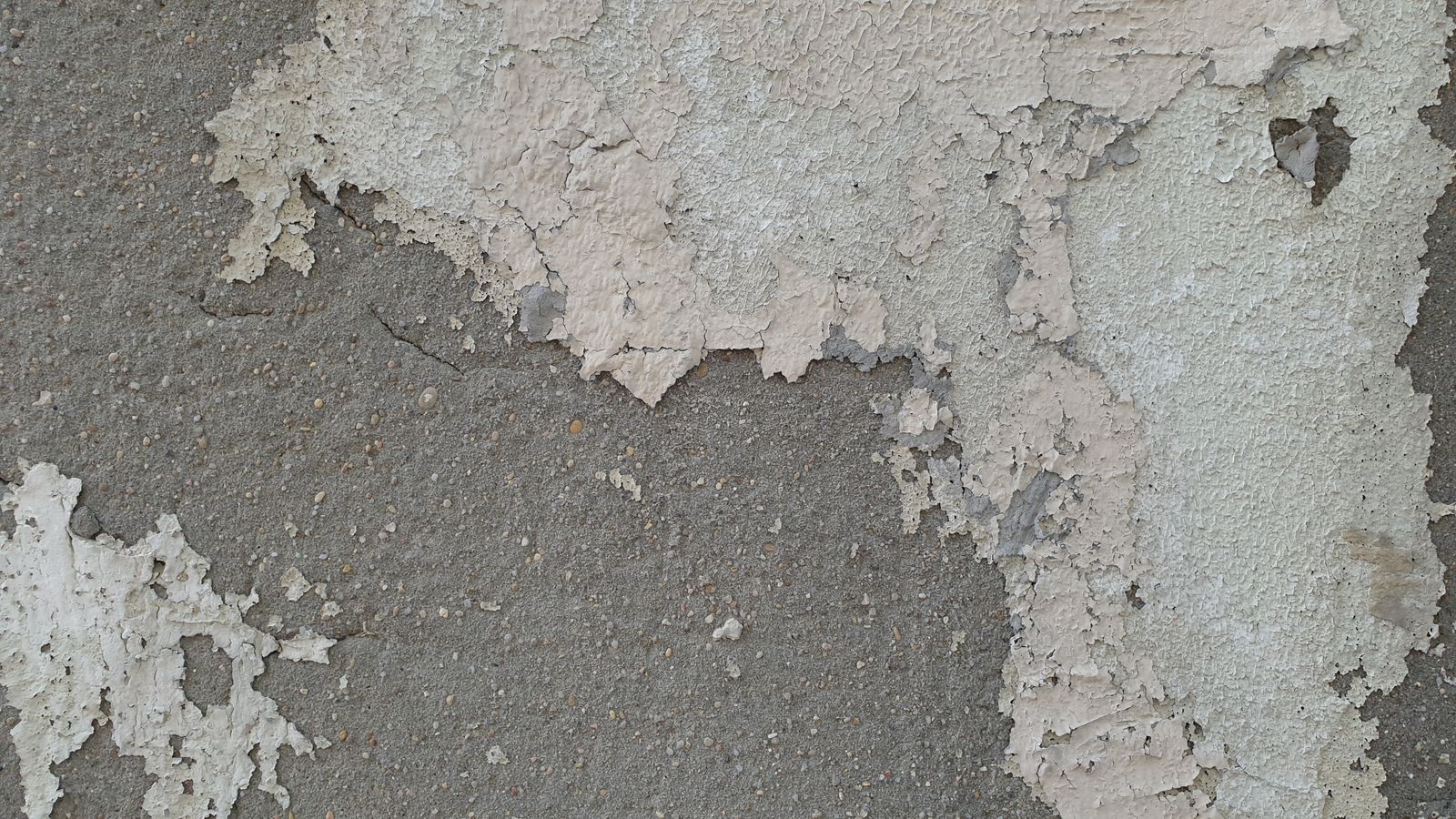
Flip a lifted piece over. If the underside is clean and smooth with no concrete stuck to it, the coating never bonded. That is a preparation problem. If there is a thin layer of concrete dust or a chalky film on the back, it bonded to loose material rather than to sound concrete, which usually means the slab was etched instead of ground, or it was never fully cleaned.
If gray concrete came up with it, the bond was actually good and the concrete itself failed. That points to a weak or contaminated slab surface.
Bubbles and blisters that lift and then pop, especially in a pattern across the middle of the floor rather than at the edges, point to moisture. So does peeling that is worse near the garage door, along a wall shared with the house, or in a low spot where water runs.
Peeling only where tires park, in two neat rectangles, is hot tire pickup and is its own specific problem.
The 7 Causes of a Failed Garage Floor Coating
1. The Slab Was Never Mechanically Profiled
This is the single biggest cause. Concrete comes with a hard, tight, closed surface. It has to be opened up, and the only reliable way is mechanical: diamond grinding or shot blasting until the surface has a consistent texture like medium sandpaper. Acid etching, which comes in most box store kits, is inconsistent on a troweled garage slab and often leaves residue behind that the coating then bonds to instead of the concrete. If the crew that did your floor did not show up with a grinder and a dust collection system, that is very likely your answer.
2. Moisture Vapor Coming Up Through the Slab
Concrete is not waterproof. Ground moisture moves up through a slab continuously as vapor, and when it reaches a sealed film it has nowhere to go. Pressure builds and pushes the coating off. This is why a floor can look perfect for a year and then blister through one wet spring.
The condition is measurable. The ASTM F1869 calcium chloride test measures how many pounds of moisture move through 1,000 square feet of slab in 24 hours, and relative humidity probes placed in the slab give a second reading. Coating manufacturers publish limits for their products. Slabs that exceed them need a moisture mitigation primer before anything else goes down. Skipping that test on an older slab is a gamble, and the American Concrete Institute has extensive material on why slab moisture behaves the way it does.
3. Hot Tire Pickup
Tires get hot on a Memphis summer afternoon. Hot rubber sitting on a thin or under-cured coating softens the film, and when the tire cools it grabs and lifts the coating with it when the car pulls out. You end up with bare patches exactly where the wheels sit.
Thin water based epoxy and single-day DIY kits are the usual victims. A properly built system with adequate film thickness and a polyaspartic or polyurea topcoat does not have this problem, because the cured surface is harder and far less sensitive to heat.
4. It Was Applied Over a Sealer or an Old Coating
Many garage slabs were sealed by the builder and nobody remembers. A curing compound or acrylic sealer left in place is a bond breaker, and the new coating grips the sealer rather than the concrete. The same goes for painting a fresh coat over an old failing one. Whatever the old layer is holding onto, the new one inherits, and both come up together.
A simple water test tells you a lot. Sprinkle water on the slab. If it beads up instead of darkening the concrete within a minute, something is sealing that surface and it has to be removed before anything is applied.
5. The Wrong Temperature or Humidity at Install
Epoxy is a chemical reaction, and reactions care about conditions. Too cold and it never fully cures, staying soft and peeling under the first real stress. Too hot and the working time collapses, leaving the crew rolling material that has already started to set.
The one that catches people in this region is dew point. If the slab temperature is at or near the dew point, a thin film of condensation forms on the concrete that nobody can see, and the coating bonds to water. On a humid Memphis morning that is a real risk, which is why slab temperature should be measured rather than assumed.
6. Mix Ratio and Pot Life Mistakes
Two part epoxy has to be mixed at the ratio the manufacturer specifies, mixed thoroughly including the sides and bottom of the bucket, and used inside its pot life. Eyeballing the ratio produces a coating that never reaches full hardness. Under-mixing leaves streaks of uncured material that stay soft and peel in patches. Stretching the pot life means the last section rolled is already curing in the bucket and bonds to nothing.
Every one of these looks fine on day one. All of them show up later.
7. It Was Simply Too Thin
A one-day kit that covers a two car garage with a single gallon is putting down a film measured in a few thousandths of an inch. That is paint, not a floor system. It has no capacity to absorb impact, no resistance to abrasion from grit tracked in on tires, and no tolerance for hot tires.
A real system is built in layers: a penetrating primer, a body coat, broadcast flake or quartz where the finish calls for it, and a protective topcoat. The total build is many times thicker, and thickness is a large part of what turns a coating into a floor.
Why Memphis Slabs Are Hard on Coatings
A garage floor in the Mid-South faces conditions that a floor in a dry climate never sees, and it is worth understanding what your slab is actually up against.
Humidity is the first factor. High ambient humidity for much of the year narrows the window for a clean install and raises the dew point risk described above. It also means slabs stay wetter for longer after rain.
Soil is the second. Much of the Memphis area and north Mississippi sits on clay that holds water and moves with it. A slab over damp clay is a slab with a steady supply of moisture underneath it, and older homes in Midtown, Germantown, and Collierville frequently have no vapor barrier under the concrete at all because none was required when they were built.
Temperature swing is the third. Summer surface temperatures in a closed garage climb high enough to soften an inadequate coating, and winter brings enough freeze and thaw cycles to work on any crack that is already there.
None of this makes a lasting floor impossible. It makes testing and preparation non-negotiable. A crew that treats a Southaven slab the same way it would treat one in Phoenix is going to have a callback.
Can It Be Patched, or Does It All Come Off?
Almost always, it all comes off. We understand that is not what anyone wants to hear.
The reason is simple. If a coating is peeling in one area because the bond failed there, the bond is compromised across the whole floor. The rest has not let go yet. Patching a bare spot means feathering new material into an edge that is already lifting, and within a season the repair peels along with the section next to it. You end up paying twice and still looking at a bad floor.
There is one narrow exception. A small, isolated area of mechanical damage on a floor that is otherwise sound and well bonded can sometimes be repaired. The test is the bond of the surrounding material, not the size of the damage.
Full removal is straightforward work with the right equipment. The old coating is ground off, the slab is profiled in the same pass, cracks and spalls are repaired, moisture is tested, and the new system goes down on clean, sound, open concrete. The removal is the part homeowners underestimate and the part that determines whether the second floor outlasts the first. It is a normal part of most garage coating jobs we take on.
What a Coating That Stays Down Actually Requires
Whatever company you hire, and whether or not it is us, these are the steps that separate a floor that lasts from one that peels. Ask about every one of them.
- Moisture testing on the slab before any material is ordered, not after the coating fails
- Mechanical profiling by diamond grinding or shot blasting across the entire floor, including corners and edges, with dust collection
- Full removal of any existing sealer, paint, or coating rather than applying over it
- Crack and spall repair with a material compatible with the coating system, done after grinding and before priming
- A primer matched to the slab condition, including a moisture mitigation primer where the readings call for it
- Slab temperature and dew point checked on the day of install, not just the air temperature
- A build thickness and a topcoat rated for vehicle traffic, hot tires, and the chemicals a garage actually sees
A crew that can answer all seven without hesitating has done this before. A quote that skips straight to color chips has not.
Epoxy or Polyaspartic in a Memphis Garage
Both have a place, and the strongest systems use them together rather than choosing sides.
Epoxy makes an excellent body coat. It builds thickness, it self levels, it fills minor imperfections, and it bonds well to properly prepared concrete. What it does not do well is handle ultraviolet light, which yellows it over time near an open garage door, and it stays softer than the alternatives in high heat.
Polyaspartic and polyurea cure much faster, stay clear rather than yellowing, and cure to a harder, more abrasion resistant surface that shrugs off hot tire pickup. They also stay flexible enough to move slightly with the slab through temperature swings, which matters here. The tradeoff is a very short working time that demands an experienced crew.
For a garage in this climate, an epoxy or primer base with a polyaspartic topcoat is the combination that handles our summers and our slabs. That same layered approach carries over to basement floors and to shop and industrial floors, where the traffic is heavier and the tolerance for downtime is lower.
Frequently Asked Questions
How long should a garage floor coating last?
A properly installed professional system on a sound, prepped slab is a long term floor, not a seasonal one, and it should hold up to daily vehicle traffic for many years with nothing more than sweeping and the occasional mop. A one-day DIY kit over an unground slab often starts showing hot tire pickup inside the first summer. The gap between those two outcomes is almost entirely preparation. If you are comparing quotes on garage coating services, compare the prep steps first.
Can I coat over a peeling epoxy floor myself?
Coating over failing material is the most common way a bad floor becomes a worse floor. The new layer bonds to the old one, and the old one is already letting go. Everything has to come off first, which means a grinder with the right tooling and dust control rather than a scraper and a weekend. If the floor is small and fully bare, a careful homeowner can get a reasonable result. If there is existing coating to remove or any sign of moisture, it is worth having it looked at.
How can I tell if moisture is the cause?
A quick field check: tape a two foot square of clear plastic sheeting tightly to the bare slab on all four sides and leave it for 24 to 48 hours. Condensation under the plastic, or a slab that has visibly darkened underneath it, means moisture is moving. That test is not a substitute for a calcium chloride or relative humidity reading, but it will tell you whether you have a problem worth measuring properly.
Does a peeling garage floor affect my home value?
Buyers notice garage floors, and a flaking floor reads as deferred maintenance on the whole house. A clean, finished floor is one of the more visible upgrades in a garage and it photographs well in a listing. Beyond appearance, a sealed floor stops the dusting and staining that bare concrete does, which is why a lot of the concrete coating work we do gets scheduled before a house goes on the market.
How long before I can park on a new floor?
It depends on the system and the conditions. Foot traffic is usually possible within hours of the final coat, and vehicles typically need several days for the coating to reach full cure and hardness. Parking early is one of the few ways to damage a correctly installed floor, so the cure schedule your installer gives you is worth following exactly. Ask for it in writing before the crew leaves.
Get a Straight Answer on Your Floor
If your garage floor is lifting, flaking, or bubbling, the useful next step is finding out why, because the cause determines whether you need a full redo or a moisture strategy first. Memphis Coatings Company has been coating garages, basements, patios, shop floors, and athletic surfaces across the Memphis metro and north Mississippi since 2018, from Germantown and Collierville to Southaven and Olive Branch. We will look at the slab, test what needs testing, and tell you honestly what it needs. Call (901) 930-5763 or see our garage coating work.