
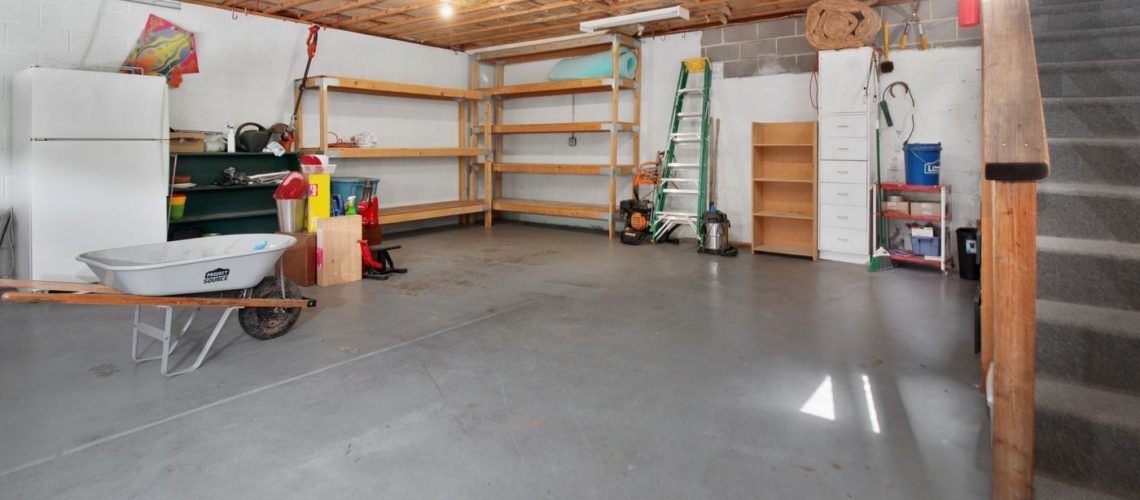
Yes, you have to grind a garage floor before coating it, and this is the single step that separates a floor that lasts from one that peels in a year. Concrete leaves the trowel with a dense, closed surface layer, and coatings cannot bond to it. Diamond grinding removes that layer along with any sealer, curing compound, old paint, or oil that soaked in, and it opens the pores so the coating mechanically keys into the concrete. Acid etching, which is what most consumer kits recommend, does not produce enough profile for a real system and leaves residue behind that has to be neutralized and rinsed. Shot blasting is the other professional option and is generally used on larger commercial slabs. If someone quotes a garage coating without mechanical preparation, the quote is for a coating that will fail. This guide covers why, what the process involves, and what else the prep has to catch.
Table of Contents
- Why You Have to Grind a Garage Floor Before Coating It
- Grinding vs Shot Blasting vs Acid Etching
- What the Profile Needs to Be
- What Grinding Exposes
- The Rest of the Preparation
- How to Tell If Prep Was Done Right
- Frequently Asked Questions
Why You Have to Grind a Garage Floor Before Coating It
When a slab is finished, the troweling process brings fine cement paste and water to the surface. That top layer, called laitance, is weaker than the concrete below it and much denser at the surface.
Two things follow. First, a coating applied over laitance is bonded to a weak layer, so it can take the laitance off with it when it fails. Second, the closed surface gives the coating almost nothing to grip. Coating adhesion on concrete is mechanical. The resin has to flow into an open pore structure and cure there, and a polished, sealed surface has no pores available.
Most garage slabs also carry a curing compound applied when they were poured, and many have been sealed since. Both are bond breakers, both are invisible, and neither comes off with cleaning.
Grinding vs Shot Blasting vs Acid Etching
Diamond grinding uses rotating diamond segments to cut the surface, run with a vacuum for dust containment. It is controllable, works right up to walls and into corners, and is the standard for residential garages. It removes coatings, sealers, and laitance, and leaves a consistent profile.
Shot blasting propels steel shot at the slab and recovers it, producing a more aggressive profile quickly over large areas. It is efficient on warehouse and industrial floors and leaves a distinct pattern that suits thicker systems. It cannot reach edges and corners, so it is normally paired with grinding at the perimeter.
Acid etching uses an acid solution to react with the surface. It is what comes in a hardware store kit because it needs no equipment. The problems are real: it produces a shallow profile suited only to thin coatings, it does not touch sealers or curing compounds, it works unevenly across a slab with variable density, and it leaves salts that must be fully neutralized and rinsed or they interfere with the bond. It also puts acid and rinse water into your driveway and storm drain.
For a system meant to last, mechanical preparation is the only approach. Our post on why epoxy garage floors peel covers what the failures look like.
What the Profile Needs to Be
The industry describes surface roughness on a standardized scale, and the target depends on how thick the coating will be.
A thin coating needs a light profile, roughly the texture of fine sandpaper. A thicker, high build system needs a more aggressive profile so the material has somewhere to key into. Over profiling for a thin coating is also a mistake, because the coating cannot fill the texture and the result telegraphs through the finish.
In practice this means the installer should know which system is going down before grinding starts, and should select tooling accordingly. A crew that grinds first and decides on the product afterward has the sequence backwards.
What Grinding Exposes
Preparation is also diagnosis. Several problems only become visible once the surface comes off.
- Oil contamination. Years of drips soak deep into concrete. Grinding reveals how far down it went, and contaminated areas need degreasing and sometimes deeper removal, because coating over oil produces a spot that never bonds.
- Cracks. Hairlines invisible under dirt become obvious on a clean, ground slab. Each one gets evaluated and filled appropriately, which our post on coating a cracked garage floor covers.
- Soft or damaged concrete. Areas that grind away faster than the rest indicate weak material that needs repair before coating.
- Previous coatings. Old paint or sealer shows up as areas that resist the grinder differently.
- Moisture. A slab that darkens persistently, or that shows efflorescence, is telling you to test before proceeding.
The Rest of the Preparation
Grinding is the main event but not the whole job.
- Moisture testing. Vapor moving up through a slab on grade will push a coating off. Test, and if readings are high, use a moisture mitigation primer rated for the measured level.
- Crack and spall repair. Filled with compatible materials after grinding, not before, so the repairs sit flush with the prepared surface.
- Control joint treatment. Decide whether joints are filled or honored. Filling gives a seamless look and supports the edges. Coating over a moving joint means it reappears.
- Full dust removal. Vacuum thoroughly. Grinding dust left on the slab is a bond breaker every bit as effective as a sealer.
- Edge detail. Hand grinding at walls, around posts, and at the garage door threshold, since that is where coating failures start.
The Portland Cement Association publishes technical information on concrete surfaces and their treatment that underpins most of this.
How to Tell If Prep Was Done Right
Homeowners can check a few things without any expertise.
Ask what preparation method is quoted, and get it in writing. Ask whether moisture testing is included. Watch for the equipment: a grinder with a dust extraction system is the tool you want to see arrive, and a jug of acid is not. After grinding and before coating, the slab should look uniformly dull and feel gritty, not smooth or shiny. Water dropped on it should soak in rather than bead.
Grinding also generates a lot of silica dust, which is a genuine respiratory hazard and is regulated for good reason. Dust extraction protects the crew and keeps it out of the rest of your house, and the Occupational Safety and Health Administration sets the standards that professional crews work to. A contractor grinding dry without containment is cutting corners you can see from the driveway.
Frequently Asked Questions
Can you skip grinding if the garage floor is new?
No. A new slab has the densest laitance layer and almost always carries a curing compound, both of which prevent bonding. New concrete also needs to cure adequately before coating.
Is acid etching ever acceptable?
Only for thin consumer coatings on clean, unsealed concrete, and even then it is the weaker option. It cannot remove sealers or curing compounds and leaves residue that must be neutralized.
How long does grinding a garage floor take?
A typical residential garage is ground in a matter of hours, with additional time for repairs and edge work. The coating goes down after the slab is clean and any repairs have cured.
Does grinding remove oil stains?
It removes surface staining and reveals how deep the contamination goes. Oil that penetrated further needs degreasing or deeper removal, because a coating will not bond over it.
Ready for a Garage Floor That Stays Down?
Memphis Coatings Company grinds, tests, and coats garage floors across Greater Memphis. Contact us and we will tell you what your slab needs before quoting a finish.