
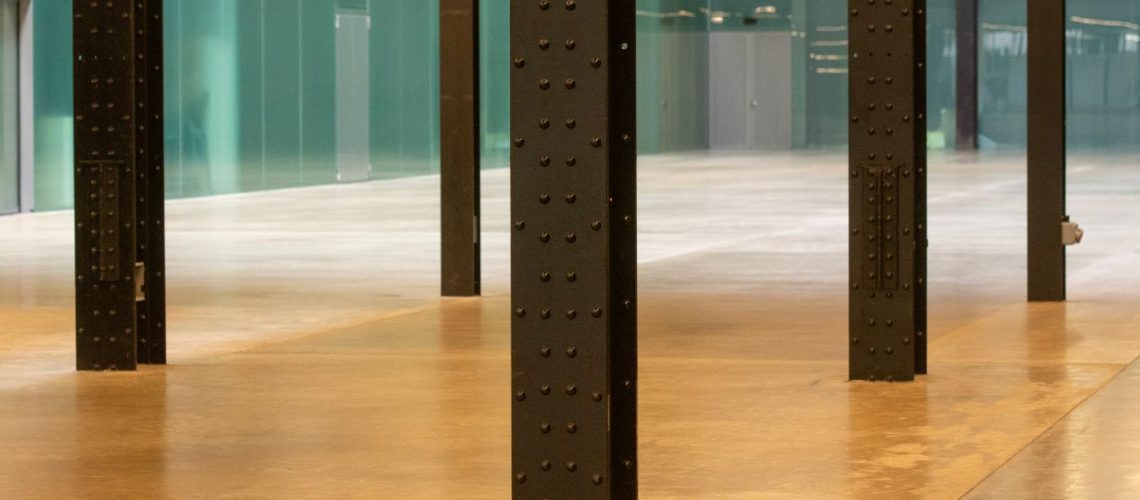
Polished concrete for a retail floor is usually an excellent choice, because it is the existing slab refined rather than a covering laid on top of it. There is nothing to delaminate, nothing to peel at the edges, and nothing to replace on a cycle. Mechanically grinding and densifying the concrete hardens the surface itself, so it handles shopping carts, pallet jacks, and constant foot traffic, and it cleans with a dust mop and an auto scrubber rather than wax. It also reflects overhead light, which reduces the lighting load in a large open space. Three conditions rule it out. A slab with significant moisture problems, a slab too damaged or too soft to take a polish, and a space where the exposed aggregate look is wrong for the brand. This guide covers what you get, how the grit and sheen choices work, and how to tell whether your slab is a candidate.
Table of Contents
- Why Retail Suits Polished Concrete
- Grit Level and Sheen, Explained
- Aggregate Exposure Changes the Look
- When Polished Concrete Is the Wrong Call
- Slip Resistance and Safety
- What Maintenance Looks Like
- Frequently Asked Questions
Why Retail Suits Polished Concrete
Four properties line up well with how a store actually operates.
- It is the slab, not a layer. Densifier penetrates and reacts inside the concrete, hardening it. There is no film to wear through, so there is no edge to lift and no bond to fail.
- It handles traffic. Carts, pallet jacks, and heavy foot traffic in the same lanes are exactly what a polished slab is built for.
- It reflects light. A higher sheen returns a meaningful amount of overhead light, which brightens a large sales floor and reduces the fixtures needed to hit a target light level. The Department of Energy and most lighting designers treat surface reflectance as a real variable in a space this size.
- It is simple to clean. Dust mop and auto scrub with a neutral cleaner. No stripping, no waxing, no recoating schedule, and no closing a section of the store overnight for floor work.
The absence of a maintenance cycle is what usually wins the argument. A vinyl or waxed floor carries an ongoing labor cost that never appears in the installation quote, while a polished floor’s upkeep is the daily cleaning you were already doing.
Grit Level and Sheen, Explained
Polishing is a progression through diamond abrasives, from coarse to fine. Where you stop determines the finish.
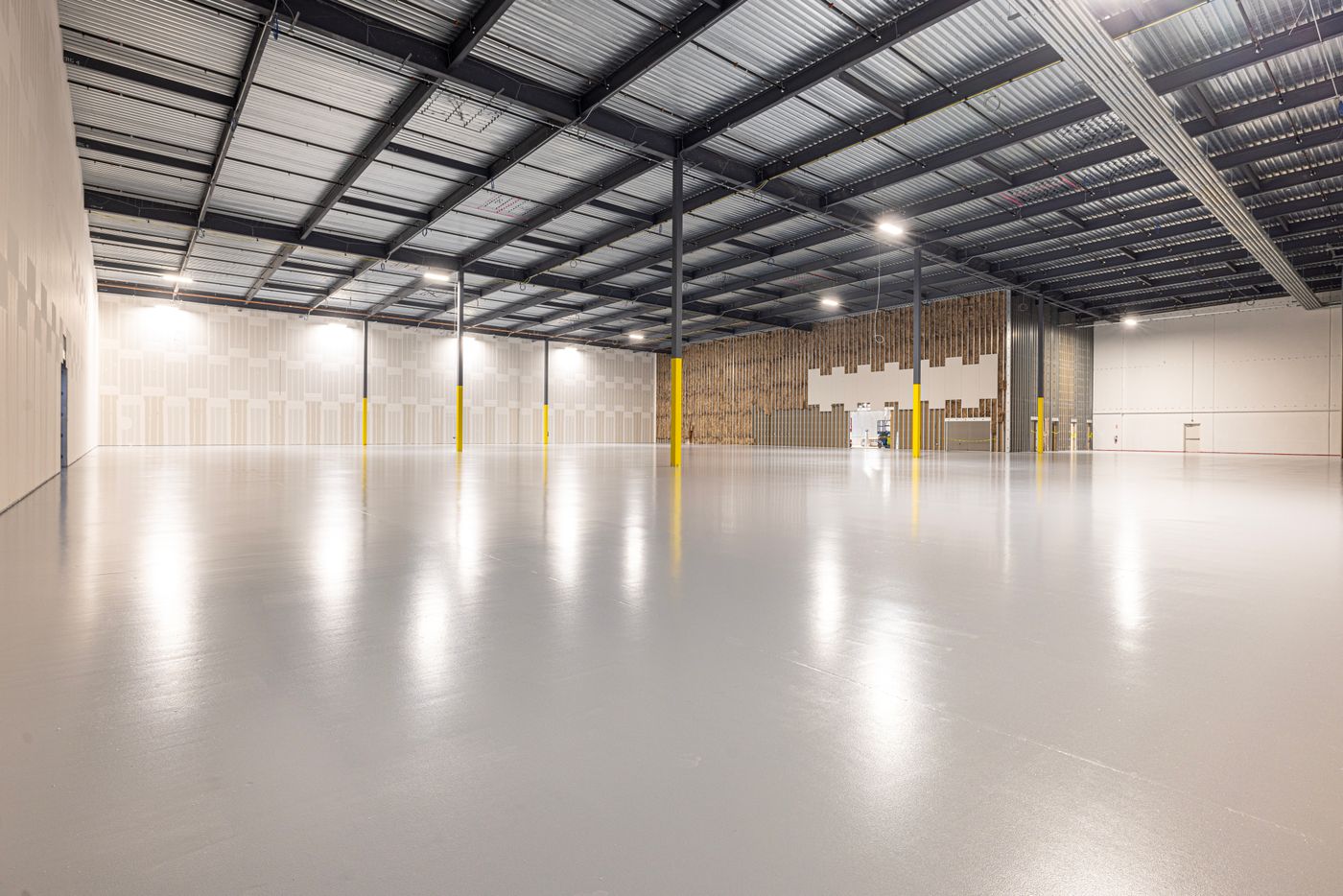
Stopping early gives a flat, matte surface with a soft appearance and very little reflection. It hides scuffing well and reads as industrial. Continuing further produces a satin finish with moderate reflection and a visible clarity to the surface. Going all the way to the fine grits gives a high gloss with mirror like reflection and the greatest visual depth.
For retail, the satin to high gloss range is typical, because light reflection is part of the value. The tradeoff is that higher sheen shows scuffs, tire marks, and dust more readily, so a store with heavy cart traffic sometimes lands one step below the maximum on purpose. The American Concrete Institute publishes the technical framework these finish levels are specified against.
Aggregate Exposure Changes the Look
The second decision is how deeply the initial grinding cuts, and it changes the appearance far more than sheen does.
A light cut barely removes the surface cream, leaving a mostly uniform gray with only fine sand visible. A medium cut exposes small aggregate in a consistent speckle. A deep cut opens the slab enough to expose the large stone, producing a look closer to terrazzo.
This choice is not entirely yours. It depends on what is actually in the slab and how flat it is. A slab with variable cover over the aggregate will expose unevenly on a deep cut, and a floor with previous patches will show them. Anyone specifying a deep exposure should require a test area first, because the result is permanent and the mockup is the only honest preview. The Portland Cement Association covers how mix design and placement affect the finished surface.
When Polished Concrete Is the Wrong Call
Three situations where something else is the better answer.
- A slab in poor condition. Extensive cracking, large patched areas, heavy spalling, or a surface that was troweled too hard and is now soft and dusty. Polishing refines what is there, so it will reveal the history of the slab rather than hide it. Repairs are visible in a polished floor in a way they are not under a coating.
- A moisture problem. Polished concrete is more tolerant of vapor transmission than a coating is, because it breathes. But a slab with active moisture intrusion will still show efflorescence and darkening, and the underlying issue does not go away.
- The wrong aesthetic. A polished floor looks like concrete. That works for grocery, big box, hardware, showrooms, breweries, and most modern retail. It is wrong for a space that needs warmth or a specific color, and a decorative coating or a stained and sealed system may fit better.
A fourth consideration: joints. Control joints remain visible in a polished floor and can be filled for a cleaner look and better cart rolling, but they do not disappear. Our comparison of polished concrete and epoxy covers when a coating is the better answer.
Slip Resistance and Safety
The most common objection to a glossy floor is that it looks slippery, and the reality is more specific than that.
Dry polished concrete has good traction, and the gloss is optical rather than a coating on the surface. Wet polished concrete is genuinely slick, which is the real issue in retail because entrances collect rain, produce departments create wet floors, and spills happen.
The practical measures are the ones that matter. Use adequate walk off matting at entrances, long enough to actually dry shoes rather than as a token. Apply a traction treatment in entry zones and any area that gets wet regularly. Respond to spills promptly and use wet floor signage. OSHA’s walking and working surfaces standard sets out the employer obligations, and accessible routes in a retail space also have to be kept clear and slip resistant.
What Maintenance Looks Like
Daily: dust mop or auto scrub with a neutral pH cleaner. That is the routine, and the neutral pH part is not optional. Acidic cleaners etch the surface and alkaline cleaners dull it, and both do cumulative damage that shows as a loss of clarity across the sales floor.
Periodically, depending on traffic, the floor gets burnished to restore sheen in the busiest lanes. Every several years a light re polish at the fine grits brings the whole floor back without touching the aggregate exposure. Neither operation requires closing the store the way stripping and waxing does.
One habit protects the investment more than any other: keep grit off the floor. Sand and dirt tracked in act as an abrasive under every cart wheel and every shoe. Matting at the doors and regular dust mopping do most of the work of keeping a polished retail floor looking new.
Frequently Asked Questions
Is polished concrete for a retail floor slippery?
Dry, it has good traction and the gloss is optical rather than a slick coating. Wet, it is slippery, so entrance matting and a traction treatment in wet zones are important.
Can any concrete slab be polished?
Most can, but condition decides the result. Heavily cracked, patched, spalled, or soft slabs will show that history in the finish, and a test area is the way to find out before committing.
Does polished concrete need to be sealed?
The densifier hardens the concrete itself, and a stain guard is typically applied on top to resist staining. Neither is a film coating, so there is nothing to strip or recoat on a schedule.
Can a store stay open during polishing?
Work is usually phased by section or done overnight. The grinding is dust controlled but noisy, so most retail projects run outside business hours.
Ready to Find Out If Your Slab Is a Candidate?
Memphis Coatings Company provides concrete polishing and commercial floor coatings across Greater Memphis. Contact us and we will cut a test area before you decide.