
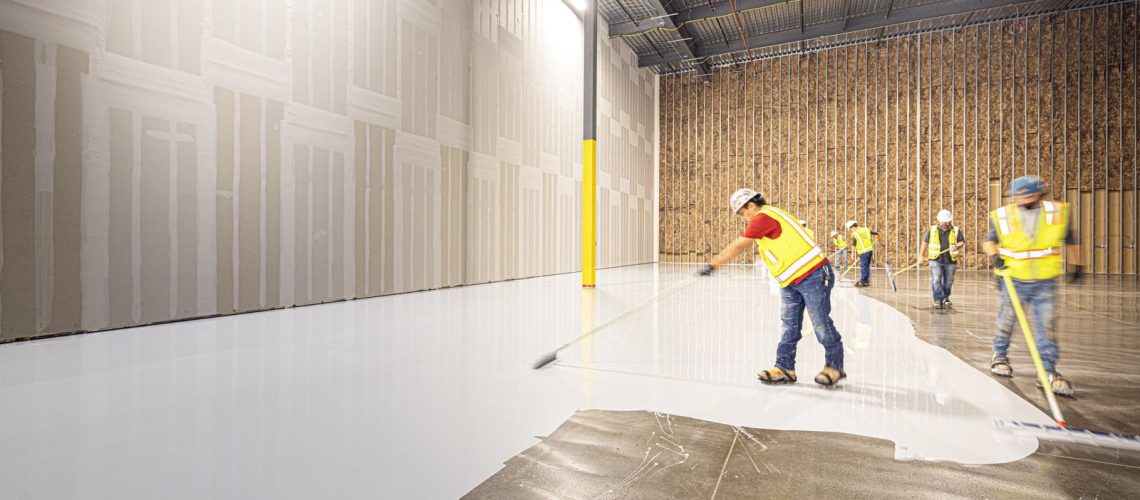
If you are choosing between polished concrete and an epoxy coating for a floor in the Memphis area, the honest answer is that they solve different problems. Polished concrete grinds and refines the slab you already own until it shines on its own. An epoxy coating adds a new layer on top of that slab. One is a finish, the other is a barrier, and picking the wrong one is how people end up redoing a floor two years later. Here is how we decide on real jobs around Memphis, Germantown, Collierville and north Mississippi.
Table of Contents
- The short answer
- What polished concrete actually is
- What an epoxy coating actually is
- 7 factors that decide which floor you need
- Where each floor wins in a Memphis building
- What the install actually looks like
- Frequently asked questions
The Short Answer
Choose polished concrete when the slab underneath is in good shape, the space is mostly dry, and you want a hard, low maintenance floor that never needs recoating. Choose an epoxy or polyaspartic coating when the slab is stained, patched or cracked, when chemicals and oil get spilled on it, or when you want a specific color and chip pattern. In a Memphis garage, coatings win most of the time. In a large retail or warehouse space with a clean slab, polished concrete often wins.
The deciding factor is almost never how it looks. It is what the floor has to survive.
What Polished Concrete Actually Is
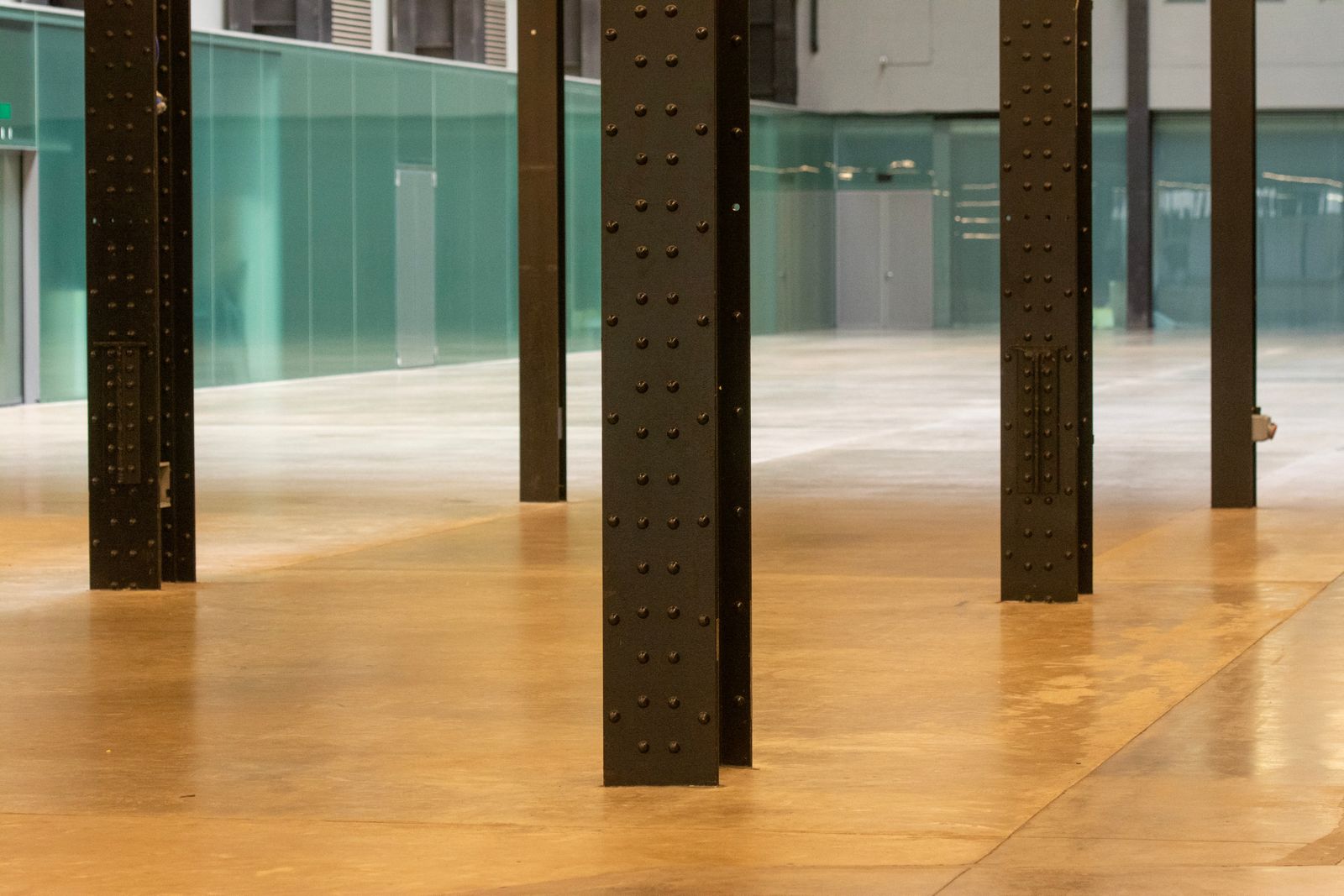
Polished concrete is not a product you roll on. It is a process. We run diamond grinders across the slab in progressively finer steps, the same way you would sand wood from coarse to fine. Somewhere in that sequence a hardener called a densifier soaks into the surface and reacts with the concrete, making the top layer denser and more resistant to wear. Keep refining and the surface starts to reflect light on its own.
That means the floor you end up with is the slab. Nothing was added on top, so there is no coating to peel, chip or delaminate. It also means the character of your existing concrete shows through. Grind deeper and you expose more of the sand and stone in the mix. Stay shallow and you keep a smoother, more uniform look. Neither one is better, but you should know which you are getting before the grinders come out.
Because polished concrete relies on the slab itself, it is unforgiving about what is already there. Old adhesive, deep oil staining, spalling and old patchwork all stay visible to some degree. We are refining what exists, not covering it up.
What an Epoxy Coating Actually Is
An epoxy coating is a two part resin that goes down over a prepared slab and cures into a hard layer bonded to the concrete. On most of the floors we install, epoxy is only part of the system. It gives the build and the bond, then a polyaspartic or urethane top coat goes over it for UV stability and a faster cure. Vinyl chips broadcast into the base coat give you the flake look most people picture in a garage.
The advantage is that a coating is a fresh surface. Cracks get filled, low spots get leveled, stains disappear underneath, and you pick the color. The trade off is that a coating is only as good as the preparation beneath it. A coating over a slab that was never properly ground, or over a slab pushing moisture up from below, will fail no matter how good the product is. That is the most common reason we get called out to fix somebody else’s work.
You can see the full range of finishes on our floor coating finishes page, from solid colors through to a full chip broadcast.
7 Factors That Decide Which Floor You Need
1. How Much Traffic the Floor Takes
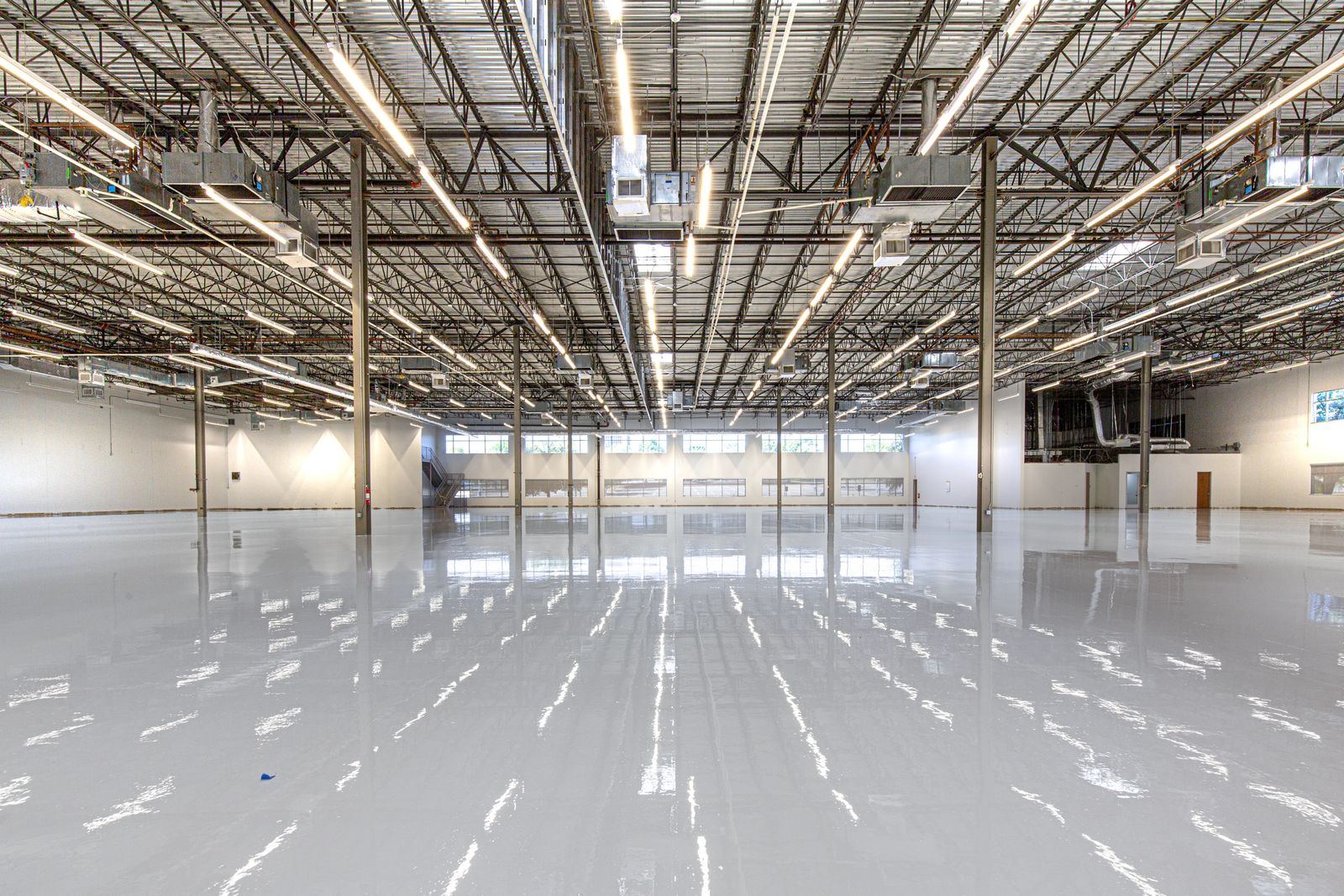
Forklifts, pallet jacks and steel wheels are hard on coatings. They are not nearly as hard on polished concrete, because there is no separate layer to gouge through. A busy distribution floor with constant hard wheel traffic is a strong argument for polishing. Foot traffic and rubber tires are easy on both, so traffic alone rarely rules out a coating in a home garage or a showroom.
2. Whether the Slab Has Moisture
This is the factor people skip, and it is the one that ruins floors. Concrete poured on grade can push water vapor up from the soil beneath it. A coating traps that vapor and the pressure eventually breaks the bond, which shows up as bubbling or as sheets lifting off. A polished floor breathes, so vapor is far less of a problem. If a slab tests high for moisture, polishing or a dedicated moisture mitigation system is the honest recommendation, not a standard coating. Good installers test rather than guess, and the American Concrete Institute publishes the standards that testing follows.
3. What Gets Spilled on It
Polished concrete is dense, but it is still concrete, and concrete reacts to acid. Battery acid, some cleaning chemicals, wine and even repeated citrus can etch a polished floor. Epoxy and polyaspartic systems shrug off most of that. If you are doing a shop bay, a commercial kitchen or a lab, the chemical resistance of a coating usually settles the question on its own.
4. How Much Downtime You Can Afford
Polishing is a dry, multi pass process and the floor is usable as soon as the crew finishes. Coatings need cure time between layers. This is where the system matters: a straight epoxy build can take days before you can park on it, while a polyaspartic top coat cuts that down substantially. On most residential garages we are in and out and the customer is back on the floor the next day. For a business that cannot close, the sequencing matters more than the product name.
5. The Look You Want
If you want a specific color, a chip blend that matches your branding, or a floor that hides an ugly slab, that is a coating. If you want the natural stone and sand of the concrete to show through with a clean architectural sheen, that is polishing. Be honest with yourself here, because a polished floor shows the history of the slab, and some people love that while others do not.
6. Slip Resistance
Both surfaces are slick when wet, and both can be made safer. Coatings take a grit additive in the top coat, and the chip texture itself adds grip. Polished concrete can be treated with a conditioner that improves traction without killing the sheen. If the floor gets wet regularly, say so during the quote so it gets built in rather than added later. OSHA covers the general requirement in its walking working surfaces standard.
7. Long Term Maintenance
Polished concrete gets cleaned with a dust mop and a neutral cleaner, and it gets burnished periodically to bring the sheen back. It never gets recoated. A coating is just as easy day to day, but it has a service life, and eventually the top coat gets refreshed. Neither is high maintenance next to tile grout or sealed wood, but only one of them is genuinely permanent.
Where Each Floor Wins in a Memphis Building
Memphis humidity is the local wrinkle. Slabs here often carry more moisture than people expect, especially in older buildings and anything below grade. That pushes basements and some older commercial slabs toward polishing, or toward a coating system built specifically to handle moisture.
For residential garages, coatings win almost every time. Garage slabs are usually stained, sometimes cracked, and homeowners want color. See how we handle those on our garage concrete coating page.
For warehouses and distribution space, polished concrete is often the better long term answer, particularly with hard wheel traffic. We cover that work on our warehouse floor coatings page.
For shops, kitchens and anywhere chemicals land, a coating is the safer call purely for its chemical resistance.
For retail, offices and showrooms with a decent slab, polishing gives you a clean, modern floor with very little ongoing cost. If you are weighing that option, our Memphis concrete polishing page walks through the process.
What the Install Actually Looks Like
Both jobs start the same way, and that first step decides everything that follows. We mechanically grind the slab with diamond tooling. We do not acid etch. Etching does not open the surface the way grinding does, and it is the shortcut behind a large share of the failed coatings we get called in to replace.
From there the two paths split. A polishing job continues through finer grits with a densifier applied partway through, then finishes with burnishing and usually a stain guard. A coating job moves to crack and joint repair, then the base coat, then the chip broadcast if you chose flake, then scraping and vacuuming the loose chip, then the clear top coat.
On either job, ask whoever is quoting it what grit sequence they run and what they are doing about moisture. If the answer is vague, keep calling. Concrete is a well documented material, and the Portland Cement Association publishes plenty on how it behaves.
What Actually Makes a Floor Fail Early
Almost every failed floor we are called out to replace failed for one of four reasons, and none of them is the brand on the bucket. Knowing these makes you a much harder customer to sell to, which is a good thing.
The Slab Was Never Properly Opened
A coating needs a surface with texture to grip. Acid etching and pressure washing do not create that texture reliably, and neither does a light scuff. Diamond grinding does. When a coating peels off in sheets that look like a plastic skin, poor mechanical preparation is nearly always the reason. This is also why polished concrete is a safer bet on a slab whose history nobody knows, since polishing is the grinding.
Moisture Was Never Tested
A slab can look bone dry and still be moving water vapor up through it every day. You cannot see it and you cannot feel it. The only way to know is to test, and if the number comes back high, the answer is either a moisture tolerant system or a polished floor that lets the slab breathe. Skipping the test is gambling with the whole job.
The Product Was Wrong for the Room
Straight epoxy yellows in sunlight. Put it in a garage with an east facing door and it will not stay the color you picked. That is why a polyaspartic or urethane top coat exists. Similarly, a beautiful polished floor in a room where somebody parks a battery charger and spills acid is the wrong tool. Match the system to what actually happens in the space.
Cure Time Got Rushed
Coatings cure chemically, and the schedule is not a suggestion. Driving on a floor before the top coat has cured leaves tire marks that never come out, and stacking heavy inventory too early can bruise the surface. If a contractor tells you a full epoxy build will be ready for vehicles in a few hours, ask them to put it in writing.
How the Two Compare Side by Side
If it helps to see it plainly, here is the short version of everything above. Polished concrete is permanent, breathable, extremely hard against wheel traffic, low maintenance, and limited to the color and character your existing slab already has. It is vulnerable to acids and it cannot hide a slab in poor condition.
A coating is customizable in color and texture, hides a damaged slab, resists chemicals and oil, and can be finished in a day on a typical residential garage. It depends completely on the preparation beneath it, it has a service life, and it is the wrong answer on a slab with an untreated moisture problem.
Most Memphis homeowners asking about a garage end up with a coating. Most facility managers asking about a large, clean, dry warehouse slab end up with polished concrete. The rest of the time it comes down to the seven factors above, which is why we would rather look at the floor than answer over the phone.
Frequently Asked Questions
Is polished concrete cheaper than epoxy?
It depends entirely on the condition of your slab, so anyone quoting either option without seeing the floor is guessing. A clean, flat slab polishes efficiently. A slab that needs significant repair first can make polishing the more involved route. We look at the floor before we say anything about what it costs. You can see the finishes we install on our floor coating finishes page.
Can you put epoxy over polished concrete?
Yes, but the polish has to be ground off first. A polished surface is dense and closed, and a coating needs an open surface to bond to, so it has to be reopened with diamond tooling before anything goes down. That is extra work, which is why the decision is worth getting right the first time. Our garage concrete coating process starts with that same grinding step.
Does polished concrete crack?
Polishing does not cause cracks, and it does not prevent the ones a slab was already going to develop. Concrete moves, and control joints exist to decide where it cracks. Existing cracks can be filled before polishing, though they usually stay faintly visible, which is part of the honest look of a polished floor. A coating hides them more completely, which is one reason garages lean toward epoxy floor coatings.
How long does each floor last?
Polished concrete lasts as long as the slab does, because it is the slab, and it is maintained by burnishing rather than recoating. A properly installed coating over properly prepared concrete lasts many years in a residential garage before the top coat needs attention. In both cases the preparation underneath predicts the lifespan far better than the product name does. Our warehouse floor coatings page covers what heavy use does to each.
Can polished concrete work in a garage?
It can, and we do install it, but it is the less common choice for a Memphis garage. Garage slabs are usually stained from years of use, often cracked, and homeowners generally want a color and a flake pattern rather than the raw slab look. Polishing also leaves the floor more open to battery acid and de-icing salt than a coating does. If your garage slab is newer and in genuinely good condition, it is worth discussing. Our garage concrete coating page shows what the more typical route looks like.
Which one is better for a basement?
Usually polished concrete, and the reason is moisture. Below grade slabs in the Memphis area often carry vapor pressure from the soil around them, and that is exactly the condition that lifts a coating. Polishing lets the slab breathe. If you want color down there, the honest path is a moisture test first and a system chosen around the result, not around the swatch. We cover the options on our floor coating finishes page.
Not Sure Which One Your Floor Needs?
Send us a photo of your slab and the rough square footage and we will tell you honestly which way we would go and why. Call (901) 930-5763 or use the form on our site. We work across Memphis, Germantown, Collierville, Bartlett, Southaven and Olive Branch.