
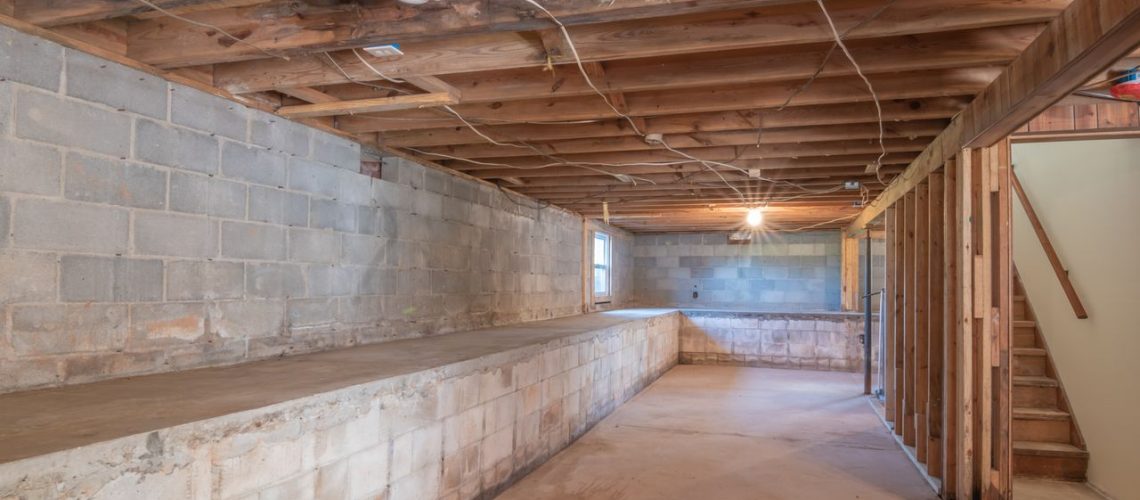
Can you epoxy a basement floor? Yes. A basement slab holds a coating as well as any garage floor, and in some ways it holds one better, because there are no hot tires, no door-side sunlight, and no road salt to fight. The one thing that decides whether the project succeeds is moisture, and that is where a basement is different from every other floor in a Memphis home. This guide walks through when a basement slab is ready for a coating, when it is not, which products actually belong below grade, and what the finished floor changes about how the space gets used.
Table of Contents
- The Short Answer
- Can You Epoxy a Basement Floor That Gets Damp?
- Epoxy, Polyurea, or Polyaspartic: What Belongs in a Basement
- Prep Decides Whether the Coating Lasts
- What a Coated Basement Floor Changes Around the House
- What Memphis Weather Means for a Basement Slab
- How to Get Ready for Coating Day
- When Epoxy Is the Wrong Call
- Frequently Asked Questions
The Short Answer
Almost every unfinished basement in the Memphis area sits on bare concrete, and bare concrete is a sponge. It dusts, it stains, it drinks up spills, and it makes the whole room feel like a storage cave instead of part of the house. A floor coating seals that slab into a dense, cleanable surface with a finished look, which is why coated basements are one of the most common projects we take on alongside garages.
The honest answer to the question has two parts. Yes, a basement floor can be coated, and the result is one of the most durable finished floors you can put below grade. But the slab has to be checked for moisture first, and it has to be mechanically prepped, not just cleaned. Skip either step and the coating peels, no matter whose name is on the bucket. Our crew has been coating concrete across the Memphis metro since 2018, and nearly every failed basement coating we get called to fix traces back to one of those two shortcuts.
If your basement stays dry through a Mid-South spring, the project is straightforward. If it does not, the moisture problem gets solved first and the coating comes second. The next section explains how to tell which situation you are in.
Can You Epoxy a Basement Floor That Gets Damp?
Sometimes, but the dampness has to be understood before anyone opens a can of anything. A basement slab sits below grade, which means ground moisture can move up through the concrete as vapor even when the floor looks dry. A coating is a vapor barrier. Put one over a slab that is pushing moisture and the pressure builds under the film until it blisters or lets go.
There is a simple screening test any homeowner can run. Tape a square of clear plastic sheeting to the slab, seal all four edges, and leave it for a day or two. If the underside fogs up or the concrete darkens beneath it, moisture is coming through. Installers use meters and calcium chloride tests to put numbers on it, but the plastic sheet tells you whether there is a conversation to have.
Where the moisture comes from matters as much as whether it exists. The University of Minnesota Extension has a thorough breakdown of basement moisture causes and solutions, and the pattern it describes fits Memphis houses well: bad gutter discharge, grading that slopes toward the foundation, and humid outside air condensing on cool concrete. Fix those sources and many damp basements become coatable. Ignore them and no floor product on the market will save the slab.
Dampness is also a health question, not just a flooring question. The EPA is blunt that the key to mold control is moisture control, and a musty basement is usually a moisture signal, not a smell a new floor covers up. The good news is that a properly coated slab is nonporous, so once the moisture source is handled, the floor itself stops feeding mold and mildew the damp, dusty surface they like.
So can you epoxy a basement floor that shows some vapor? With the right moisture-tolerant primer and a slab that tests within the product limits, yes. With standing water, active seepage, or a failed test, no, and any installer who says otherwise is selling you a callback.
Epoxy, Polyurea, or Polyaspartic: What Belongs in a Basement
Homeowners say epoxy the way people say Kleenex. It has become the word for every coated concrete floor, but there are really three product families in play, and a basement changes the math between them.
Epoxy is the classic. It builds a thick, hard film and bonds well to properly ground concrete. Its known weakness, yellowing in sunlight, barely matters below grade, which makes a basement one of the friendlier places for it. Polyurea and polyaspartic systems are newer chemistry: more flexible, more chemical resistant, and much faster curing, which is how a floor can be walked on the next morning instead of the next week. We build our basement floor coating systems from these materials because the speed and flexibility pay off in real houses, not just on spec sheets.
Two basement-specific points are worth knowing. First, cure smell. A basement is inside the living envelope, so low odor matters more than it does in a garage with the door open. Modern polyaspartic topcoats and quality residential epoxy floor coatings are far easier to live with during install than the solvent-heavy products of years past. Second, temperature. Basements stay cool, and cool concrete slows cure times. An experienced crew plans the product and the schedule around slab temperature instead of finding out the hard way.
Which one is right for your basement depends on how the room will be used, how the slab tests, and how fast you need it back in service. That is a walk-the-floor conversation, not a dropdown menu.
Prep Decides Whether the Coating Lasts
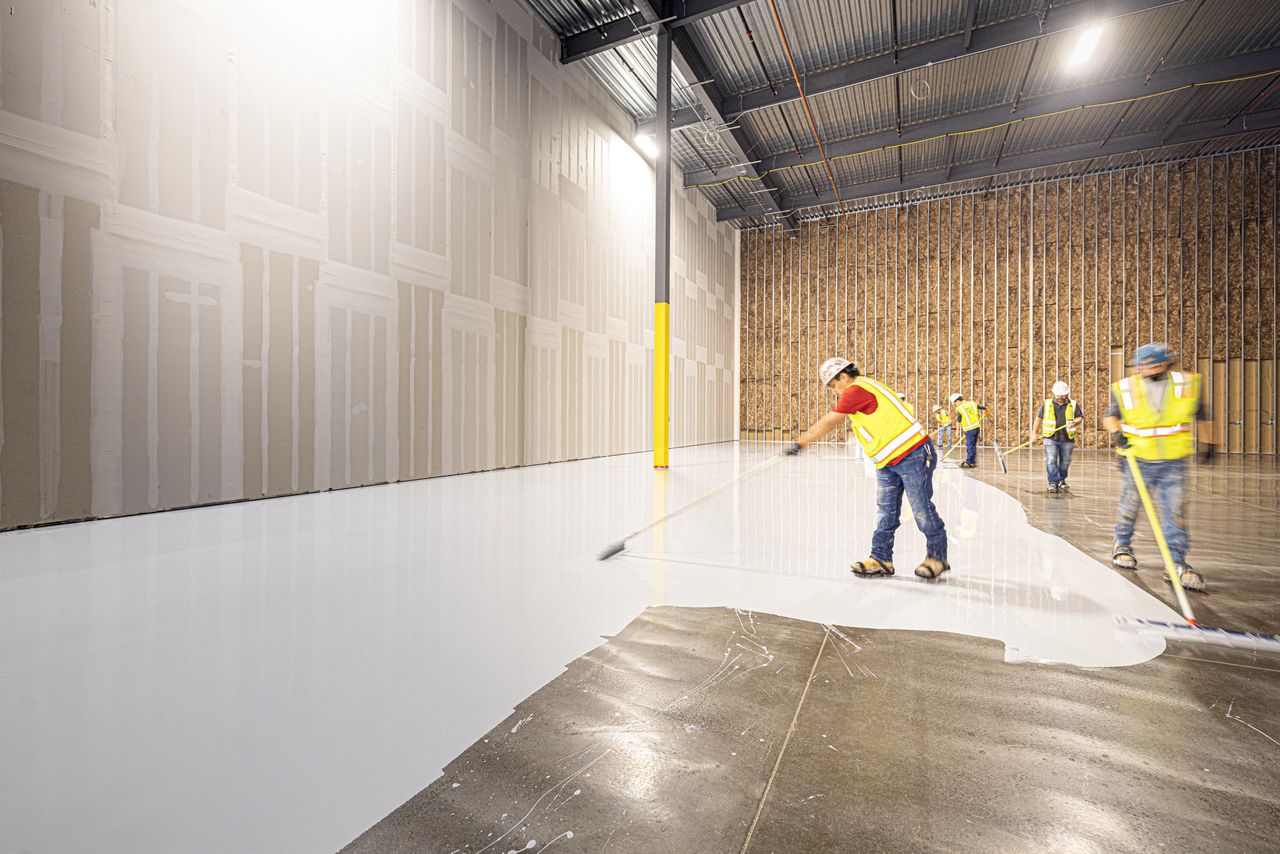
Every coating failure story starts the same way: the floor was cleaned, maybe acid etched, and the product went down on concrete that was never actually opened up. A coating does not stick to concrete the way paint sticks to drywall. It needs profile, a texture like fine sandpaper, so the resin can key into the slab. The only reliable way to get it is mechanical grinding.
On a professional install, the crew grinds the entire slab with diamond tooling, vacuums the dust, then repairs what the grinding reveals. Basement slabs hide surprises under old paint and carpet glue: hairline cracks, pitting, spalled patches, the seams around a sump pit. Cracks get routed and filled, pits get patched, and moisture readings get taken on the freshly opened concrete because that is the number that tells the truth.
Then the system goes down in layers: primer chosen for the slab moisture profile, a base coat, decorative flake if the homeowner wants it, and a clear topcoat that takes the abuse. On many residential floors that whole sequence happens in one day. What cannot be rushed is what comes before it. A DIY weekend kit skips the grinding because homeowners do not own grinders, and that is the main reason those floors peel in a few seasons while a ground-and-layered floor keeps going. It is also why our basement coating work carries a 15-year warranty. The warranty is really on the prep.
What a Coated Basement Floor Changes Around the House
The practical wins show up fast. A coated slab wipes clean with a dust mop and a bucket of soapy water. Cat litter, laundry overflow, a knocked-over paint can, none of it soaks in. The floor stops producing the fine concrete dust that settles on everything stored down there. And because the finish is light reflective, the same bulbs suddenly light the room better, which anyone with a single-fixture Memphis basement will appreciate.
It also changes what the room can be. A sealed, finished floor is the first step in turning a storage basement into a home gym, a playroom, a workshop, or a laundry room you do not mind standing in. Unlike carpet or laminate, a coated slab shrugs off the occasional water heater leak or storm-season humidity spike: mop it, dry it, done, with no pad to tear out and no planks to warp. For a below-grade room in the Mid-South, that resilience is the whole argument.
The look is not an afterthought either. Flake systems in stone and granite tones, solid colors, and satin or gloss topcoats mean the floor can read as finished living space instead of painted concrete. Homeowners across Memphis, Germantown, Collierville, Southaven, and Olive Branch have used exactly that to reclaim the biggest unused room in the house. The 5.0-star average across 77 reviews on our work says the finished floor holds up to the promise.
What Memphis Weather Means for a Basement Slab
The Mid-South is a hard place to be a concrete slab. Memphis summers run humid for months at a stretch, and when that thick outside air reaches a basement that stays cooler than the rest of the house, the moisture in it condenses on the coolest surfaces in the room: the slab and the bottom of the walls. That is why a basement can feel clammy in July even when not a drop of rain has come through. Spring is the other test. Heavy rain events load the soil around the foundation, and any weakness in gutters, downspout extensions, or grading shows up at the base of the wall first.
None of that rules out a coating. It just shapes the job. A dehumidifier handles the summer condensation side, and it protects everything else stored down there too, not just the floor. The rain side is a drainage question, and it is the reason the moisture test happens before the proposal, not after. So can you epoxy a basement floor in a climate like this one? Yes, and the houses that get it right treat the coating as the last step in a dry basement, not the first.
There is one more local wrinkle worth naming. Slabs in our area were often poured without a vapor barrier underneath, especially in older Midtown and East Memphis homes. Those floors can still coat well, but they are exactly the ones where guessing is expensive and a fifteen-minute test tells the whole story.
How to Get Ready for Coating Day
Once a slab passes its moisture check, the homeowner side of the job is mostly about clearing the room. Everything comes off the floor, including the shelving that has not moved since the last president. The water heater, furnace, and washer typically stay put, and the crew works around them, but the more open slab the grinder can reach, the cleaner the finished floor looks. If the basement has a floor drain or sump pit, point it out early so the edging plan accounts for it.
Plan the household around the cure window. Grinding is loud for part of a day, and while modern products are far lower odor than the old solvent epoxies, it is still fair to keep pets and kids upstairs until the topcoat sets. Light foot traffic usually returns the next morning, and furniture follows once the floor reaches a full cure. Your installer should give you those times in writing for the specific products going down, because they shift with slab temperature.
The last piece of prep is a conversation, not labor. Decide how the room will be used before coating day, because that choice drives the texture. A future home gym wants more anti-slip grit in the topcoat. A showpiece rec room might favor a smoother satin finish. Adding grit later means another topcoat, so it is cheaper to answer the question once, up front.
When Epoxy Is the Wrong Call
Can you epoxy a basement floor in every house? No, and a company that says yes to every slab is not doing you a favor. Here is when we tell homeowners to hold off.
Active water is the hard stop. If water enters the basement during heavy rain, if the sump pump runs constantly, or if efflorescence, the white mineral crust, keeps blooming on the slab, the water management comes first: grading, gutters, drainage, sump work. A coating is a finish, not a waterproofing repair, and using it as one buries the problem where you can no longer see it.
Structural movement is the other one. A hairline shrinkage crack is routine prep work. A crack with vertical offset, or a slab section that rocks or heaves, means the concrete itself needs attention before any finish makes sense. A coating will bridge a stable crack, but it cannot hold a moving slab together, and it should never be asked to.
Everything else, stains, pitting, old paint, carpet glue, a previous failed DIY epoxy, is just prep. Grinding removes it all. If the biggest sins on your slab are cosmetic, it is a candidate, and the only way to know for sure is a moisture test and a walk-through, which is exactly how we start every basement project.
Get a Straight Answer on Your Basement Floor
Memphis Coatings Company has coated concrete across the Memphis metro and north Mississippi since 2018, with a 15-year warranty on our layered systems, financing available, and one-day installs on many residential floors. If you want to know whether your basement slab is ready, call (901) 930-5763 and we will test it and tell you the truth, even when the answer is fix the gutters first.
Frequently Asked Questions
Is epoxy or polyurea better for a basement floor?
Either can be the right answer, and the slab decides. Epoxy builds a thick, economical base and its UV weakness is irrelevant below grade, while polyurea and polyaspartic systems cure faster, flex more, and get the room back in service sooner. Most of our basement floors use a layered system rather than a single product, and our basement epoxy page breaks down how those layers work together.
Can a coated basement become a rec room or home gym?
Yes, and it is one of the most common reasons Memphis homeowners coat the slab. The coating handles rubber mats, weight racks, foot traffic, and spilled drinks without staining, and it cleans up with a mop. Our rec room flooring page shows how a sealed floor becomes the base layer for the rest of the build-out.
How long does a basement floor coating take to install?
Many residential basements are ground, repaired, and coated in one day, with light foot traffic the next morning. Cool slab temperatures can stretch cure times, so furniture and heavy use wait a little longer than they would in a summer garage project. The full sequence is laid out on our installation process page.
Is a basement coating the same as a garage floor coating?
The chemistry is similar but the priorities differ. A garage floor coating is engineered around hot tires, UV at the door, and automotive chemicals, while a basement system is chosen for moisture vapor, low cure odor inside the living space, and cool-slab curing. Same family of products, different recipe, which is why the moisture test comes first in a basement.
Do basement floor coatings help with musty smells?
They help, but only after the moisture source is fixed. A musty smell is mold and mildew feeding on damp, porous surfaces, and a coated slab removes one of their favorite ones, since the sealed floor no longer absorbs moisture or holds dust. Pair the coating with a dehumidifier and corrected drainage and the whole room changes character. Our Memphis concrete coating team sees it on basement jobs across the metro every year.