

To clean an epoxy floor, sweep or dust mop the grit off, then damp mop with warm water and a neutral pH cleaner, and let it dry. That is the entire routine, and doing it consistently is what keeps a coated floor looking new for years. What damages epoxy is not traffic, it is the wrong cleaning products and abrasive grit left on the surface. Acidic cleaners such as vinegar or citrus based products dull the finish over time. Bleach and harsh solvents attack the resin. Abrasive pads and stiff brushes scratch the gloss and leave a hazy traffic lane that no amount of mopping brings back. Sand and dirt ground underfoot act like sandpaper and do more cumulative damage than any vehicle. None of those are difficult to avoid once you know about them. This guide covers the routine, what to keep off the floor, and how to handle the specific problems that come up.
Table of Contents
- How to Clean an Epoxy Floor: The Routine
- What to Keep Off the Floor
- Handling Specific Messes
- Five Things That Damage Epoxy
- Garage Specific Problems
- When It Needs a New Topcoat
- Frequently Asked Questions
How to Clean an Epoxy Floor: The Routine
- Weekly, or more often in a busy space: remove the grit. Use a soft bristle push broom, a dust mop, or a vacuum with a soft floor attachment. This is the most important step because loose sand and dirt are abrasive under every shoe and tire.
- Monthly, or as needed: damp mop. Warm water with a neutral pH cleaner, using a microfiber or soft mop. Wring it out well, since standing water is unnecessary and slow to dry.
- Rinse if the cleaner requires it. Residue left on the surface dulls the gloss and can become slippery.
- Spot clean spills when they happen. Most things wipe off an epoxy floor easily if they are not left to sit.
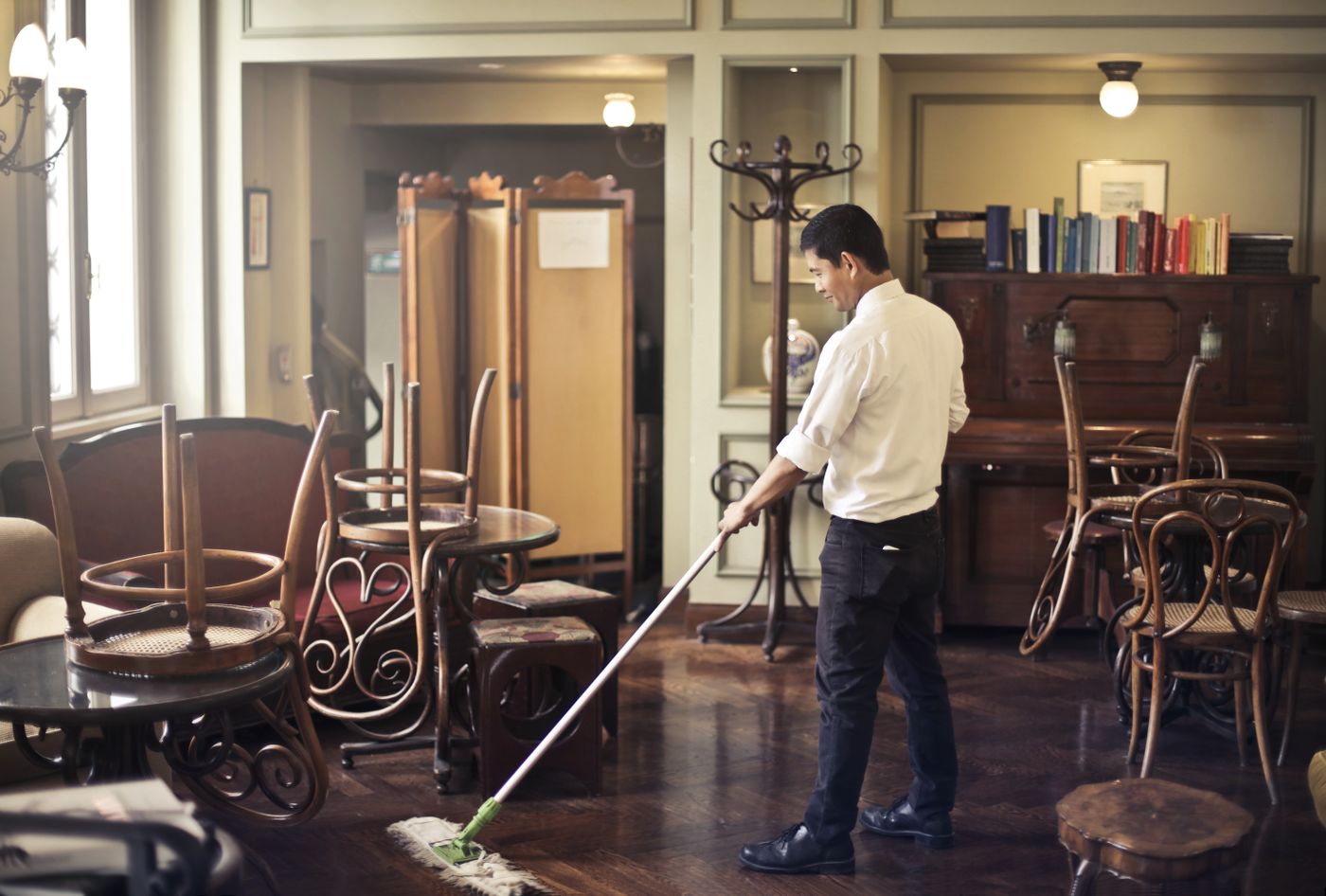
For a large commercial floor an auto scrubber with a soft, non abrasive pad and a neutral cleaner does the same job faster. Set it to a light pad pressure, because aggressive scrubbing is what creates the dull lanes.
What to Keep Off the Floor
- Acids. Vinegar, citrus cleaners, and any acidic product etch the finish gradually. The damage is cumulative and not reversible by cleaning.
- Bleach and ammonia. Both attack the resin and dull the surface. Neither is necessary on a non porous floor.
- Harsh solvents. Acetone, lacquer thinner, paint stripper, and similar products soften epoxy on contact.
- Soap based cleaners. These leave a film that builds up, looks hazy, and gets slippery when wet.
- Abrasive pads and powders. Green or black scrubbing pads, steel wool, and scouring powders all scratch the gloss.
- Steam cleaners. Heat and pressure together are unnecessary and can stress the bond, particularly at edges.
If you are unsure about a product, test it in a corner or a closet area before using it on the main floor. Choosing low odor, low emission cleaners also matters in an enclosed garage or interior space, and the EPA covers indoor air quality considerations for household and commercial products.
Handling Specific Messes
Oil, grease, and automotive fluids. Wipe up as much as possible, then clean with warm water and a neutral degreaser. Epoxy does not absorb these, so the only real risk is leaving them long enough to become a slip hazard or to soften the finish in the case of solvents.
Tire marks. The dark scuffs under parked vehicles are plasticizer migrating out of hot tires. Warm water with a neutral cleaner and a soft nylon brush removes most of them. Do not reach for a solvent, and do not scrub with an abrasive pad, because both cause more damage than the mark itself.
Road salt and winter residue. Rinse it off rather than letting it dry on the surface. The salt itself is not the danger to the coating so much as the abrasive grit that comes with it.
Paint, adhesive, or dried spills. Soften with warm water and lift with a plastic scraper held at a shallow angle. Never use a metal blade.
Five Things That Damage Epoxy
- Grit left on the floor. The leading cause of a worn traffic lane. Sweeping is the highest value maintenance you can do.
- The wrong cleaner. Acids and harsh chemicals dull the surface permanently.
- Dragging heavy objects. Toolboxes, jack stands, and equipment slid across the floor gouge it. Lift, or use furniture pads and a dolly with soft wheels.
- Hot tire pickup. Tires that come off the road hot and park on a coating can pull at it, which is more of a risk on thin consumer coatings than on a properly installed professional system.
- Standing water at the edges. Water allowed to sit against an edge or a crack works underneath over time.
Sharp impact is the other one worth mentioning. A dropped tool can chip a coating, and a chip left open lets moisture reach the concrete. Touching up a chip early keeps it from spreading.
Garage Specific Problems
Two issues come up in garages that do not come up elsewhere.
The first is moisture from below in Memphis humidity. If you see cloudy patches, whitish deposits, or blistering that appears without an obvious cause, the problem is vapor coming up through the slab rather than anything you did while cleaning. That points back to the original preparation, and our post on why epoxy garage floors peel covers it.
The second is the door threshold. That edge takes rain, sun, and the most tire traffic, and it is where wear appears first. Keeping it clean and watching for any lifting at the edge catches problems while they are still a repair.
A practical habit for both: park on a mat during the wettest months, and squeegee water toward the door rather than letting it sit at the back wall.
When It Needs a New Topcoat
A well maintained floor eventually loses gloss in the traffic lanes while the rest still looks new. That is normal wear on the topcoat rather than failure of the system.
At that point the floor can usually be lightly abraded and given a new topcoat, which restores appearance without removing the base layers. That is far less work than a full replacement and it is the reason a professionally installed system has a long service life. The signs it is time are a dull, scuffed appearance that cleaning no longer improves, reduced traction, and visible wear through the color in the busiest areas.
Recoating is the point of no return if you wait too long. Once the wear goes through to the concrete, the repair becomes a removal and reinstallation. The American Concrete Institute publishes guidance on maintaining concrete surfaces and coatings that covers the underlying principles. Our post on how long a garage floor coating lasts covers the factors that decide the timeline.
Frequently Asked Questions
What is the best cleaner for an epoxy floor?
Warm water with a neutral pH cleaner. Avoid acids, bleach, ammonia, solvents, and soap based products, all of which either etch or leave a film.
Can you pressure wash an epoxy floor?
Light pressure with a wide fan tip is acceptable on a sound floor, but it is rarely necessary. High pressure at close range can lift edges and force water into any chip or crack.
How do you remove tire marks from an epoxy floor?
Warm water, a neutral cleaner, and a soft nylon brush. Avoid solvents and abrasive pads, which damage the finish more than the mark does.
Do epoxy floors need to be waxed or resealed?
No. There is no wax cycle. The finish is the coating itself, and when the topcoat eventually wears in traffic lanes it is abraded and recoated rather than waxed.
Ready to Refresh a Worn Floor?
Memphis Coatings Company installs and recoats garage and commercial floors across Greater Memphis. Contact us if cleaning no longer brings the shine back.