
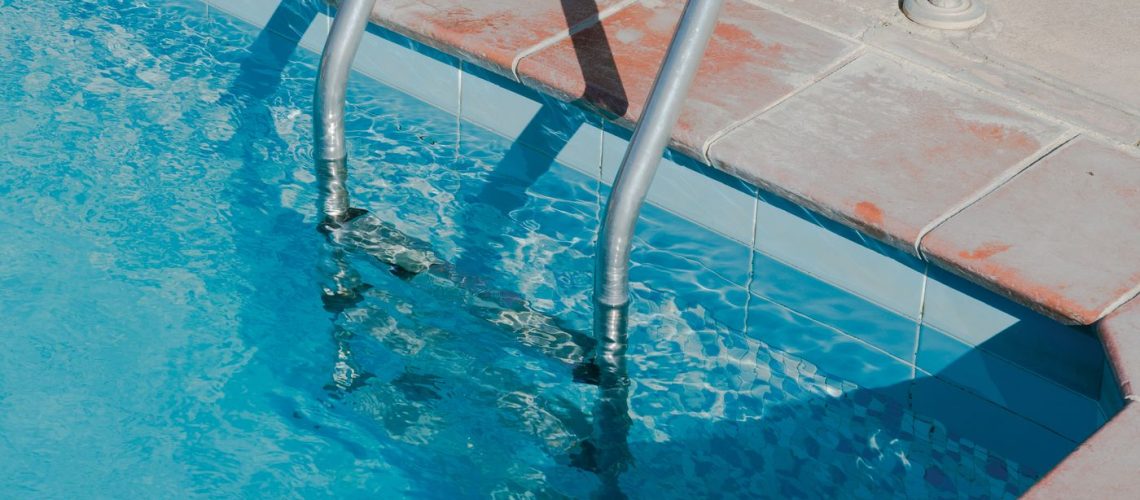
The best coating for a pool deck is a textured, ultraviolet stable system in a light color, most often a cementitious overlay or a polyaspartic system with aggregate broadcast into it. Three requirements drive that answer and they are different from every other concrete surface. The deck has to stay cool enough to walk on barefoot in a Memphis July, which rules out dark colors and dense smooth finishes. It has to hold traction when wet, which rules out any slick finish. And it has to survive constant ultraviolet exposure plus pool chemicals, which rules out standard epoxy entirely, because epoxy yellows and chalks in direct sun. That last point surprises homeowners who had epoxy put in their garage and assumed the same product works outside. It does not. This guide covers what works, why, and what the deck needs before any coating goes down.
Table of Contents
- The Best Coating for a Pool Deck: Three Requirements
- Why Epoxy Fails Outdoors
- Cementitious Overlays
- Polyaspartic and Polyurethane Systems
- Getting Traction Right
- What the Deck Needs First
- Frequently Asked Questions
The Best Coating for a Pool Deck: Three Requirements
- Surface temperature. A pool deck is walked on barefoot. Color is the dominant factor, since light colors reflect solar energy and dark colors absorb it. Surface texture helps too, because a textured surface has less contact area against the foot. A dark, smooth deck in full afternoon sun becomes unusable in summer, and no amount of product quality fixes that.
- Wet traction. The surface is wet whenever it is in use. Traction has to come from built in texture, not from a product claim, and it has to be there when there is a film of water on the surface.
- Chemical and ultraviolet resistance. Chlorinated or salt water splashes on it constantly, and it sits in full sun. The system has to tolerate both for years without chalking, fading, or embrittling.
Anything that fails one of the three is the wrong product, regardless of how well it performs elsewhere.
Why Epoxy Fails Outdoors
Epoxy is an excellent garage and warehouse coating and a poor exterior one, and the reason is chemistry rather than quality.
The aromatic structure in standard epoxy resins is not ultraviolet stable. Under direct sunlight it ambers, then chalks, leaving a dull powdery surface that transfers onto anything touching it. A white epoxy deck goes yellow, and a colored one fades unevenly, with the shaded areas staying darker than the exposed ones.
Epoxy is also rigid and forms a relatively impermeable film. An exterior slab moves with temperature swings and usually carries more moisture than an interior one, and a rigid impermeable film over a moving, damp slab is a recipe for delamination. Epoxy can serve as a base coat under an ultraviolet stable topcoat, but it should never be the exposed surface outdoors. Our post on polyaspartic versus epoxy covers the difference in more detail.
Cementitious Overlays
A polymer modified cement overlay is the traditional pool deck answer and still one of the best.
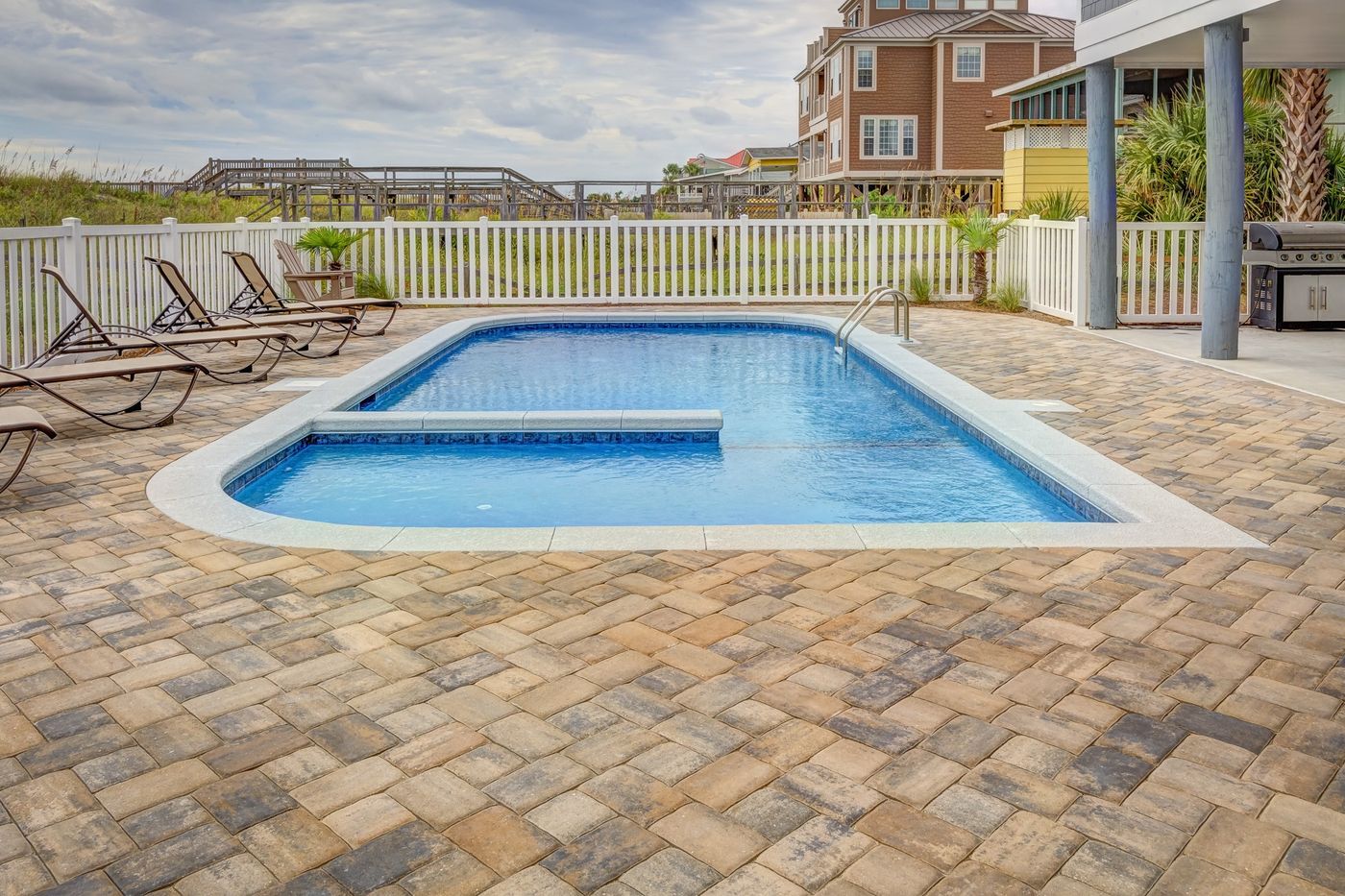
It is applied over the existing concrete, usually sprayed and then knocked down or textured by hand, and it produces a surface that is genuinely part of the deck rather than a film on top. Because it is cement based it breathes, which matters on an exterior slab that takes on moisture from below and from rain. It naturally carries texture, so traction is built in rather than added. And it accepts integral color, with light tones available that stay comfortable underfoot.
It can also be patterned to resemble stone or tile, which is why so many decks are finished this way. The limits are that it is a resurfacing product rather than a repair, so the slab underneath has to be structurally sound, and it needs a periodic sealer to keep staining down.
Polyaspartic and Polyurethane Systems
Aliphatic polyaspartic and polyurethane coatings are ultraviolet stable by design. They hold color in full sun, stay flexible enough to move with the slab, and resist pool chemicals well.
For a pool deck they are installed with aggregate broadcast into the coating to create texture, then locked in with a topcoat. The result is a durable, colorfast surface with real traction. Cure time is short, which means less disruption, and the flake or quartz broadcast options let the deck be matched to the house.
Two cautions. Color choice matters more than product choice for comfort, so keep it light regardless of how good the coating is. And a heavy broadcast texture is harder on bare feet and harder to clean, so the aggregate size has to be chosen deliberately for a barefoot surface rather than borrowed from an industrial specification.
Getting Traction Right
This is where a pool deck is judged, because a slip on a wet deck is the failure that matters.
Texture has to be built into the system, either as the natural profile of a cementitious overlay or as aggregate broadcast into a resinous one. A slip additive stirred into a clear sealer as an afterthought settles unevenly and wears off the high spots first, leaving the traffic lanes slick exactly where people walk.
Aim for enough texture to grip wet feet and not so much that it abrades skin or traps dirt. The area within a few feet of the water, steps, and any transition between levels deserve the most attention, and steps in particular should have consistent texture across the full tread. For public and commercial pools there are also accessibility requirements for the deck and entry, which the United States Access Board sets out, and employers with pool facilities have obligations under the walking and working surfaces standard.
What the Deck Needs First
Preparation decides the outcome here as much as anywhere else, with two exterior specific additions.
The slab gets mechanically profiled the same way any coating substrate does, and any previous sealer has to come off completely. Cracks are evaluated and repaired, and a moving crack in an exterior slab needs a treatment that accommodates movement rather than a rigid filler.
Then drainage. A pool deck should shed water away from the pool, and low spots that hold water will stain, grow algae, and shorten the life of whatever goes on top. Correct them during preparation. Finally, check the expansion joint between the deck and the pool coping, because that joint has to stay flexible and coating across it rigidly will crack it.
Timing matters too. Exterior coatings need a dry window and moderate temperatures, so spring and fall are the realistic seasons in this region.
Frequently Asked Questions
Can you put epoxy on a pool deck?
Standard epoxy should not be the exposed surface outdoors. It ambers and chalks under ultraviolet light. It can serve as a base under an ultraviolet stable topcoat, but not on its own.
What is the coolest pool deck coating?
A light colored, textured surface. Color does most of the work, and texture helps by reducing contact area. Dark finishes get hot regardless of the product used.
How long does a pool deck coating last?
Several years before a refresh, depending on sun exposure, chemical contact, and traffic. Cementitious overlays usually need periodic resealing, and resinous systems eventually need a new topcoat.
Can a cracked pool deck be coated?
Yes, once the cracks are properly treated. Moving cracks need a flexible repair, and coating over an untreated moving crack means it reappears through the new surface.
Ready to Fix the Deck Before Next Summer?
Memphis Coatings Company coats pool decks, patios, and outdoor concrete across Greater Memphis and North Mississippi, alongside garage and commercial work. Contact us and we will assess the slab and the drainage first.