
How long does a garage floor coating last? A professionally installed polyaspartic or polyurea system in a Memphis garage is built to last well past a decade, and many are still solid long after that. A thin do it yourself epoxy kit from a big box store is a different story, and it is common to see those start peeling in the first few years. The gap between those two outcomes has very little to do with luck and almost everything to do with the seven factors below.
Table of Contents
- The Short Answer
- Factor 1: The Coating Material Itself
- Factor 2: How the Concrete Was Prepped
- Factor 3: Moisture Coming Up Through the Slab
- Factor 4: Sunlight at the Garage Door
- Factor 5: Hot Tires
- Factor 6: What Gets Spilled On It
- Factor 7: How You Clean It
- Signs Your Coating Is Near the End
- Recoat or Start Over
- What Memphis Weather Does to a Garage Floor
- Epoxy or Polyaspartic: Which One Lasts Longer?
- What a Professional Install Actually Involves
- Does a Coated Garage Floor Hold Its Value?
- Frequently Asked Questions
The Short Answer
A garage floor coating lasts as long as its weakest layer, and that layer is almost always the bond between the coating and the concrete. Get that bond right and the surface wears out slowly and evenly, the way a good finish should. Get it wrong and the coating lifts in sheets no matter how expensive the product was.
That is why two garages on the same street, coated in the same month, can look completely different five years later. One had the slab ground down to open concrete before anything went on it. The other had a coating rolled over a swept floor. The material was never the deciding factor.
Factor 1: The Coating Material Itself
Standard epoxy is the oldest option and the most common in retail kits. It goes down thick and it looks good on day one, but it is rigid, and it yellows and chalks when sunlight reaches it. In a garage that gets afternoon sun through an open door, that shows up faster than most homeowners expect.
Polyurea and polyaspartic systems behave differently. They stay flexible, they cure quickly, and they hold up to abrasion and impact better than a rigid film does. The chemistry behind polyurea is what gives it that fast cure and its resistance to wear. In practice that means a floor that flexes with the slab instead of cracking away from it.
Most of the long lasting floors we install are layered: a primer that soaks into the concrete, a body coat, decorative flake if the homeowner wants it, and a clear topcoat that takes the abuse. The topcoat is the part that wears. That is by design, because a topcoat can be renewed without touching the layers underneath.
Factor 2: How the Concrete Was Prepped
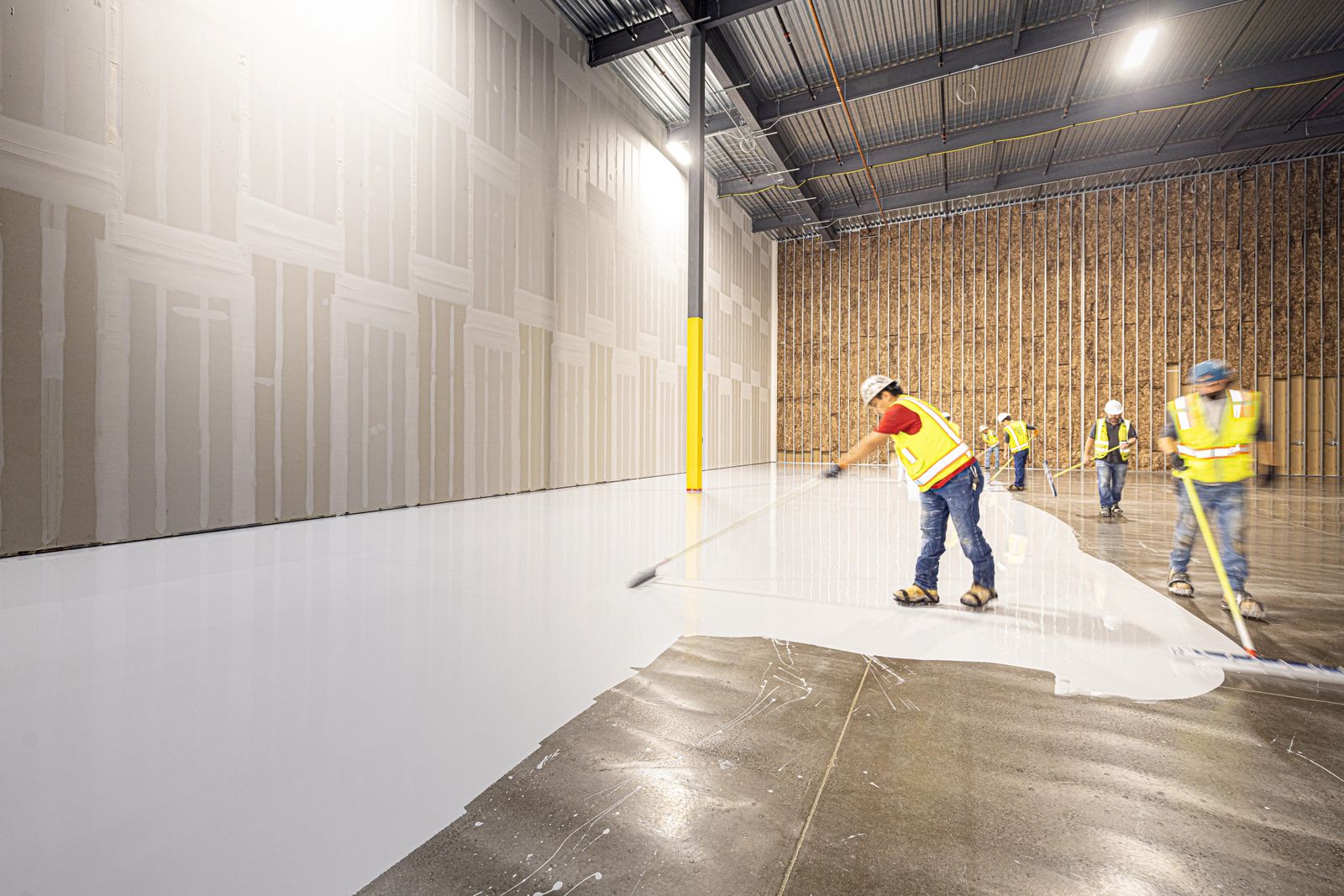
This is the single biggest predictor of how long a garage floor coating lasts. Concrete straight from the pour has a closed, slick surface. Coating over it is like taping to a dusty wall. The bond needs open pores, and the only reliable way to open them is mechanical: diamond grinding or shot blasting the slab down to clean, bare, slightly rough concrete.
Acid etching, which is what most kit instructions call for, does not get you there on a hard troweled garage slab. It softens the very top and leaves residue behind. Plenty of failed floors we are called out to look at were etched instead of ground, and the coating peels off in one continuous sheet with the underside still glossy. That is the signature of a bond that never formed.
Prep also means dealing with what is already in the slab. Old sealer, paint, mastic from tile, and oil that soaked in over twenty years all have to come out, or the new coating bonds to the contamination instead of the concrete. Cracks and spalled edges get repaired before anything is applied, not covered over.
Factor 3: Moisture Coming Up Through the Slab
A garage slab sits on soil, and soil holds water. Vapor moves up through concrete constantly. When a coating traps that vapor, pressure builds under the film and pushes it off the floor in bubbles or blisters. Homeowners usually describe it as the floor sweating, and it tends to show up in spring.
Older Memphis homes and anything on a low lying lot are the usual candidates. A slab poured before vapor barriers were standard practice has nothing under it stopping that movement. This is worth testing before a coating goes down, not after, and it is the same problem that drives decisions on basement concrete coatings, where the moisture load is higher still.
The fix is not to skip the coating. It is to choose a primer built to handle vapor drive and to install it over properly ground concrete. Get that combination right and moisture stops being the thing that ends the floor early.
Factor 4: Sunlight at the Garage Door
The first three or four feet inside the door take a beating the rest of the garage never sees. Ultraviolet light breaks down the resins in a standard epoxy, which is why that strip is usually the first to go yellow, then dull, then chalky. Once it chalks, it sheds a fine powder every time a car pulls in.
A UV stable topcoat solves it, and it is the reason we specify one on every garage where the door spends time open. The same logic applies outdoors on a front entryway coating, where there is no roof at all and sun exposure is constant.
Factor 5: Hot Tires
Hot tire pickup is the failure homeowners notice first. A tire coming off the interstate in August is hot and slightly soft. Park it on a coating that has not fully cured, or one with a weak bond, and the tire grabs the finish and lifts it when the car pulls out. You are left with two dark patches shaped exactly like tire contact patches.
Two things prevent it. The first is full cure time before a vehicle goes back on the floor, which is not the same as the surface feeling dry to walk on. The second is, again, the bond. A coating mechanically keyed into open concrete does not care how hot the tire is. This is the most common reason a retail kit fails in its first summer, and it is close to unheard of on a properly installed system.
Factor 6: What Gets Spilled On It
Garages collect the harshest chemicals in the house. Brake fluid, gasoline, battery acid, antifreeze, and fertilizer all end up on the floor at some point. A quality topcoat resists all of them, but resistance is not the same as immunity. What matters is how long a spill sits there.
Road salt deserves its own mention. Memphis does not salt often, but when an ice event hits, salt and brine come home in the wheel wells and drip onto the floor. Left to dry, that residue works into any small chip and attacks the concrete underneath the coating. Rinsing the floor after a winter storm takes five minutes and is worth doing.
Factor 7: How You Clean It
Coated floors are easy to clean, which is most of the appeal. The mistake is cleaning them with the wrong thing. Products with harsh solvents or strong acids will dull a clear coat over time, and steel wool or aggressive scrub pads will scratch it. Grit that gets tracked in and left on the floor acts like sandpaper under tires.
A soft push broom, a mop, and a neutral cleaner will keep a coated floor looking new for years. That is the entire maintenance routine. Compared with bare concrete, which stains permanently and dusts constantly, it is far less work, and it is one of the practical reasons homeowners move ahead with concrete coating for the rest of the house once the garage is done.
Signs Your Coating Is Near the End
- Dull patches in the traffic lanes. Normal wear, and usually the first sign. The topcoat is thinning where the tires run.
- Chalking near the door. A white powder that comes off on your hand means UV has broken down the surface.
- Small chips at cracks or the slab edge. Often repairable if caught early.
- Bubbles or soft spots. This is moisture or a bond problem, not wear, and it will spread.
- Peeling in sheets. The bond failed. A topcoat will not fix this.
The first three are maintenance. The last two mean the floor needs to come off and go back down correctly.
Recoat or Start Over
If the layers underneath are still bonded, a worn floor can be lightly abraded and given a fresh topcoat. The floor looks new again and the original system keeps working. This is the whole reason a sacrificial topcoat is worth having in the first place.
If the coating is lifting, recoating is throwing good money after bad. The failed material has to be ground off, the slab has to be prepped properly, and the system goes back down from the primer up. It is more work than the original job, which is why the cheap install is rarely the cheap option in the end. If you are weighing a repair against a rebuild, our garage coating team in Memphis can look at the floor and tell you which one it is.
What Memphis Weather Does to a Garage Floor
Memphis gives a garage floor a specific set of problems. Summers are long, hot, and humid, which means hot tires from June through September and vapor pressure under the slab most of the year. Winters bring freeze and thaw cycles that work at existing cracks. Spring storms push groundwater up against foundations.
None of that shortens the life of a correctly installed floor in any meaningful way. What it does is punish shortcuts quickly. A coating that would limp along for years in a dry climate shows its problems here in the first summer, which is honestly a good thing. You find out fast whether the job was done right.
Epoxy or Polyaspartic: Which One Lasts Longer in a Garage?
This is the question that decides most garage projects, so it is worth being plain about the trade offs. Epoxy is a thick, rigid, hard wearing film. It builds a heavy layer in one pass, it is forgiving to apply, and it costs less to put down. Its weaknesses are the ones that matter in a garage: it is sensitive to ultraviolet light, it is brittle in a slab that moves, and it needs a long cure before a vehicle goes on it.
Polyaspartic is a fast curing member of the polyurea family. It stays flexible, it holds its color under sunlight, and it goes back into service far sooner. It is less forgiving to install, because the working time is short and the crew has to know what it is doing. That is the real reason it is uncommon in retail kits and standard on professional jobs.
The systems that last longest usually use both. An epoxy or a specialty primer builds the bond and the body of the floor, and a polyaspartic clear coat takes the sunlight, the hot tires, and the abrasion. You get the build of one and the durability of the other. Asking an installer which product they use is less useful than asking which product goes in which layer, and why.
What a Professional Install Actually Involves
If you have only seen a weekend kit go down, the professional process looks like overkill. Every step in it exists because a floor failed somewhere without it.
- Clear and inspect. The garage is emptied and the slab is read for cracks, spalling, old coatings, oil staining, and signs of moisture.
- Grind the slab. Diamond grinders or shot blasters open the concrete to a consistent profile, and the dust is vacuumed as it is produced.
- Repair. Cracks are cut out and filled, pitting and spalled edges are rebuilt, and control joints are treated so they do not telegraph through.
- Prime. A penetrating primer soaks into the open concrete. This is the layer that actually holds the floor on.
- Base coat and flake. The body coat goes down and decorative flake is broadcast into it if the homeowner chose a flake finish.
- Scrape and vacuum. Loose flake is scraped back to a flat surface so the topcoat sits evenly.
- Topcoat. The UV stable clear coat goes on, with anti slip aggregate added if it was requested.
- Cure. Foot traffic returns first, vehicles later. Rushing this step undoes everything above it.
Notice that four of those eight steps happen before any coating is applied. That ratio is the whole answer to how long a garage floor coating lasts. The same process is what holds up under far heavier use on athletic surfaces and court resurfacing, where the floor takes constant abrasion and still has to look right.
Does a Coated Garage Floor Hold Its Value?
A coated floor is one of the few garage upgrades a buyer notices in the first ten seconds of walking in. Bare concrete reads as unfinished storage. A clean, even, reflective floor reads as usable square footage, and it photographs well, which matters more than it used to.
The practical value is bigger than the visual one. The coating stops the slab from dusting, keeps oil and chemicals from staining into the concrete, and makes the floor something you can actually mop. Homeowners who put one in usually end up using the garage for more than parking, which is the point. If you are thinking about it, our garage coating team can walk the floor with you and tell you what shape the slab is in before anything is scheduled.
Frequently Asked Questions
How long does a garage floor coating last compared to painting the floor?
Garage floor paint is not in the same category. It sits on the surface as a thin film and typically starts wearing through in traffic lanes within a year or two. A layered coating system bonds into the concrete and is measured in years, not seasons. If you want the floor to still look good when you sell the house, paint is not the answer. Our garage coating services use layered systems for exactly this reason.
Can a garage floor coating be installed in one day?
Yes, on most residential garages. Grinding, repairs, and the coating layers can be completed in a single day with fast curing polyaspartic products. What cannot be rushed is the wait before vehicles come back on it. Walking on it happens sooner than parking on it, and putting a car back too early is one of the fastest ways to ruin a new floor.
Does a coating hide cracks in the concrete?
It covers them visually, but a coating is not a structural repair. Cracks get filled and treated during prep so they do not telegraph through the finish. If a slab is actively moving, that has to be addressed first, which is true for any concrete coating project in the house.
Is a coated garage floor slippery when wet?
A smooth clear coat can be, which is why anti slip aggregate is added to the topcoat when a homeowner asks for it. It changes the texture slightly and is barely visible. It is worth requesting if the garage doubles as a workspace or if anyone in the house is unsteady on their feet.
What should I ask an installer before hiring them?
Ask how they are prepping the slab. If the answer is anything other than grinding or shot blasting, keep looking. Ask what the topcoat is and whether it is UV stable. Ask how long before you can park on it. Those three answers tell you most of what you need to know about how long the floor will last.