
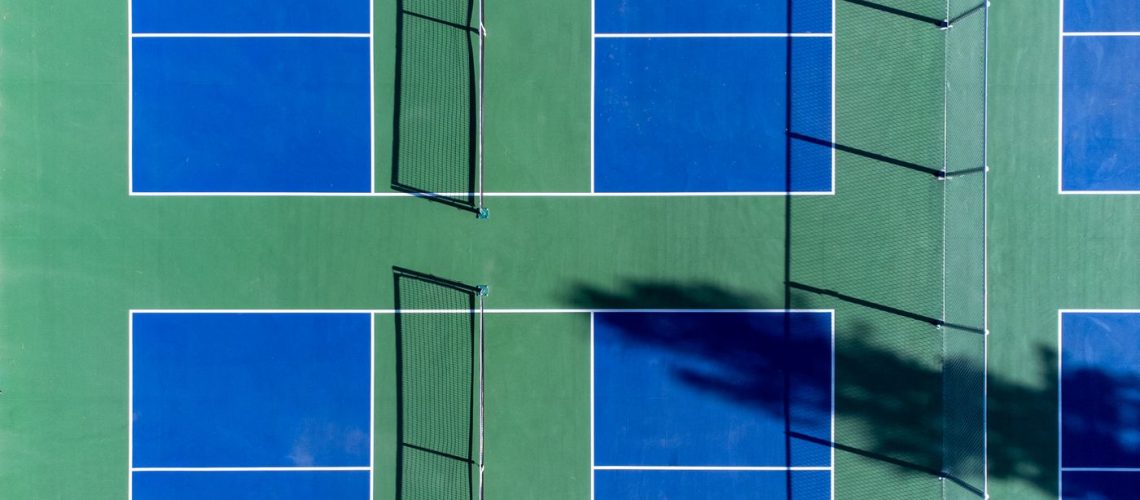
Yes, you can convert a tennis court to pickleball, and it is one of the most common court projects we see right now across Greater Memphis. There are two main ways to do it. The first is to add pickleball lines to the existing tennis court so both games share the surface, using portable pickleball nets when needed. The second is a full conversion, where the tennis net comes out and the fenced area is laid out as dedicated pickleball courts with their own permanent nets. Shared lines mean less construction and keep tennis players happy. Dedicated courts give pickleball players a better experience and let more people play at once. Either way, the job usually happens alongside a resurfacing, because fresh lines on a cracked, faded surface do not last. Memphis Coatings Company resurfaces and lines athletic courts for neighborhoods, clubs, schools, and parks, and this guide walks through the options, the layout basics, and how to time the project so the courts are ready when players want them.
Table of Contents
- Pickleball Court Basics
- Option 1: Shared Lines on a Tennis Court
- Option 2: Dedicated Pickleball Courts
- How to Choose Between Them
- What the Conversion Process Looks Like
- Timing the Project in Memphis
- Frequently Asked Questions
Pickleball Court Basics
A pickleball court is much smaller than a tennis court. USA Pickleball, the sport’s national governing body, lists the court at 20 feet wide by 44 feet long on its court construction page. The net is 36 inches high at the sidelines and 34 inches at the center, a little lower than a tennis net. Courts also need open space around the lines so players can move safely, and the governing body’s construction and maintenance manual covers recommended layouts, surfaces, and orientation in detail.
Because the court is so much smaller, a single fenced tennis court area can often hold more than one pickleball court. How many fit depends on the size of the fenced area, the space you leave around each court, and where the gates and light poles sit.
Option 1: Shared Lines on a Tennis Court
With shared lines, pickleball court lines are painted on top of the tennis layout. Tennis players keep their court, and pickleball players bring or pull out portable nets when they play.
Pros
- Keeps the court fully usable for tennis.
- Less construction, since the tennis net and posts stay.
- A good way to test demand before committing to a full conversion.
Cons
- More lines on the court can be confusing, especially for tennis players.
- Portable nets have to be set up, stored, and replaced over time.
- Scheduling gets tricky when both groups want the court at the same time.
A good color plan helps a lot. Pickleball lines are often painted in a different color from the tennis lines so each group can follow its own court at a glance.
Option 2: Dedicated Pickleball Courts
A full conversion removes the tennis net and posts and lays out the space as pickleball only, with permanent net posts for each court. Many facilities also add different colors for the playing area and the kitchen, the non-volley zone next to the net, so the layout is easy to read.
Pros
- More courts in the same footprint, so more people play at once.
- Permanent nets at the right height, with nothing to set up.
- Clean, easy-to-read lines with no overlap.
Cons
- The court is no longer usable for tennis.
- More work, including removing posts, patching the surface, and installing new posts.
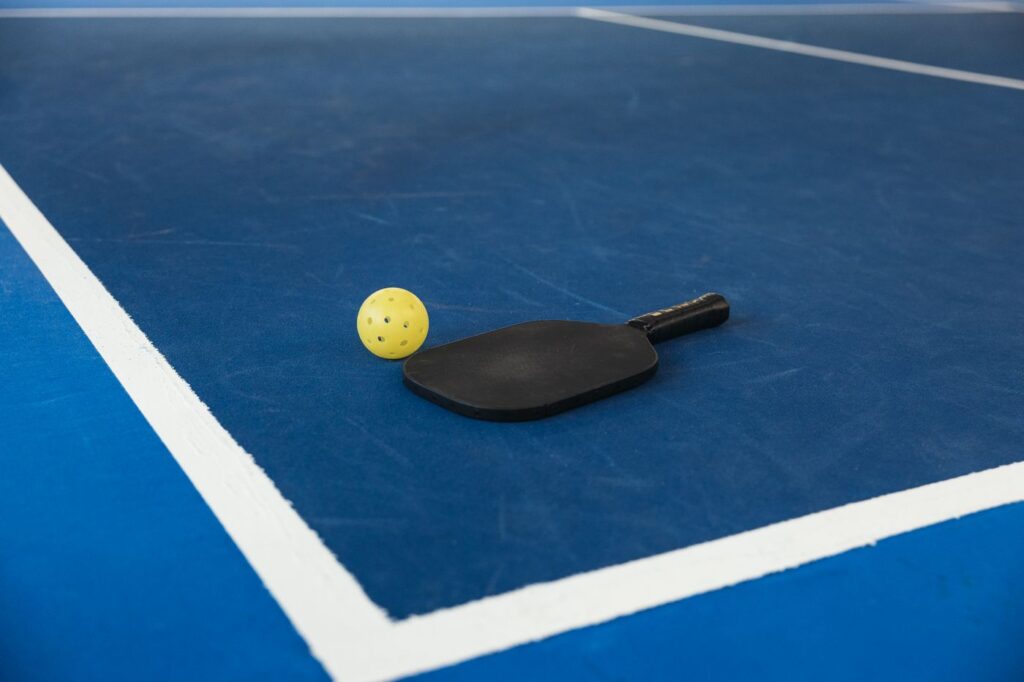
How to Choose Before You Convert a Tennis Court to Pickleball
- Who uses the court now? Count tennis and pickleball players over a few weeks. If tennis use has dropped off, a full conversion may serve more people.
- How many courts do you have? Communities with two or more tennis courts often convert one and keep the others for tennis.
- Who manages the nets? Shared courts need someone to handle portable nets.
- What about neighbors? Pickleball is louder than tennis because of the hard paddle and ball. Think about how close homes are, especially for early morning play.
- What shape is the surface in? Either option is a good time to resurface. Our post on how often tennis courts need resurfacing helps you judge where your court stands.
What the Conversion Process Looks Like
- Site review. We measure the fenced area, check the surface, and talk through the layout options with you.
- Repairs. Cracks, low spots where water ponds, and damaged areas are repaired first.
- Post work. For a full conversion, tennis posts are removed and new pickleball post sleeves are installed.
- Resurfacing. The court is cleaned and coated with acrylic resurfacer and color coats in the colors you choose.
- Line layout and painting. Lines are carefully measured and painted to the correct dimensions.
- Nets. Permanent or portable nets are set to the correct height.
Our athletic surface resurfacing page covers the coating side of the work.
Surface Details That Matter for Pickleball
Pickleball is played with a hard plastic ball that bounces lower and moves differently than a tennis ball, so the surface matters. Acrylic court coatings let the texture be adjusted with sand in the color coats, which controls how fast the ball skids and how much grip players get. Most facilities want a medium texture that plays well for both sports on shared courts.
Drainage is the other detail. Water that ponds in low spots after rain keeps a court closed longer and breaks down the coating faster, so those birdbaths should be leveled and patched before new color goes down. Cracks deserve the same attention, since a crack running through a kitchen line or baseline is distracting and keeps growing if it is only painted over. Fencing, windscreens, benches, and lighting are worth reviewing during the same project, because pickleball players often play in smaller groups and later into the evening.
Timing the Project in Memphis
Acrylic court coatings need dry weather and mild to warm temperatures to cure properly. In the Mid-South that makes spring through early fall the main season for court work, with cold, wet stretches in winter limiting the days available. That makes late fall and winter the right time to plan: settle on the layout, get approval from your HOA or board, and get on the schedule so work can start as soon as the weather allows in spring. Courts that are ready by the time the spring playing season picks up get the most use.
Frequently Asked Questions
Can a tennis net be used for pickleball?
A tennis net is taller than a pickleball net, so it is not ideal. Some players lower a tennis net for casual play, but portable or permanent pickleball nets are the better option.
What color should pickleball lines be?
On a shared court, pick a color that contrasts with both the court surface and the tennis lines. On dedicated courts, white lines on contrasting court colors are common.
Can a basketball court be lined for pickleball?
Often, yes, if there is enough room and the surface is suitable. We can look at any hard court space.
Do schools and universities do this too?
Yes. Our university athletic surfaces page covers larger campus projects.
Ready to Add Pickleball?
Memphis Coatings Company resurfaces and lines athletic courts across Greater Memphis and north Mississippi. Get a quote and we will lay out the options for your court.